October 7, 2026
Heat Pump vs. Gas Furnace in Northwest Arkansas: Which Is Better for Your Home?
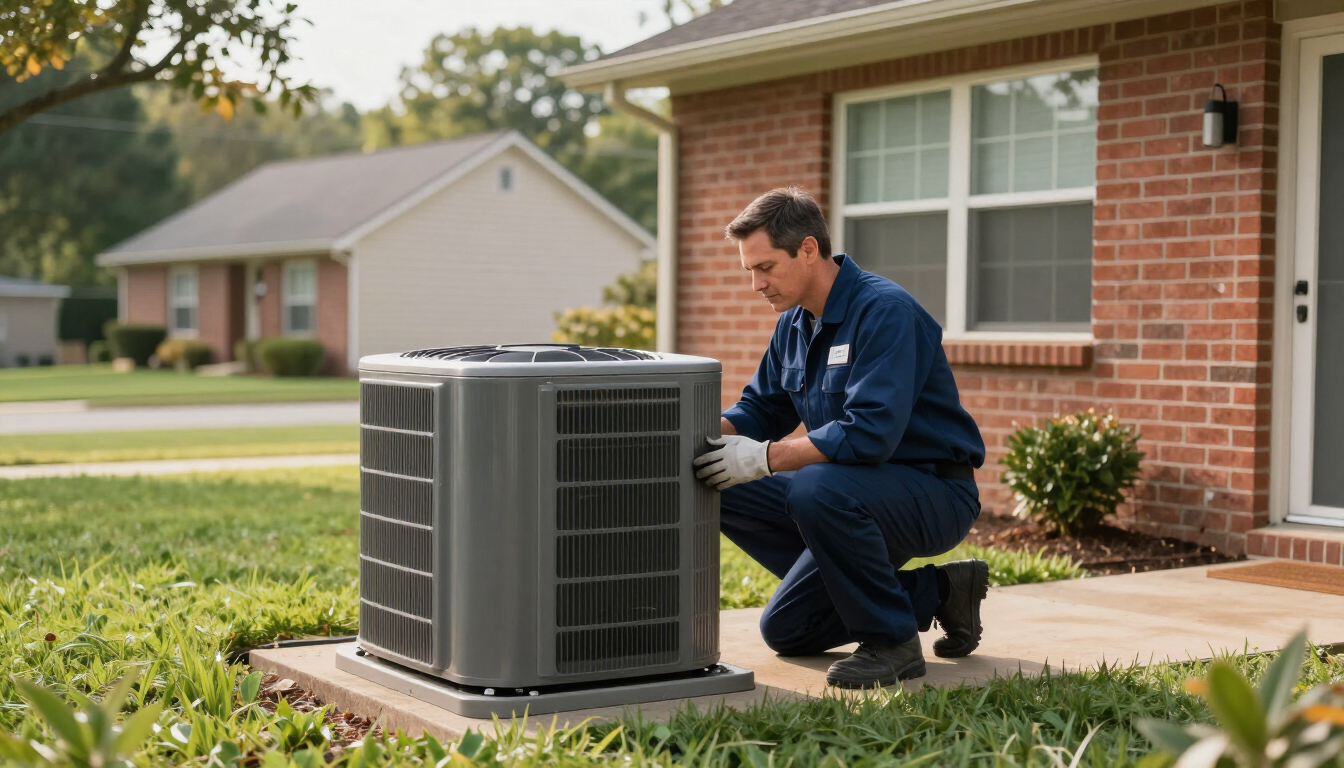
A Rogers homeowner called us in October with a question that took forty-five minutes to answer properly. His eighteen-year-old gas furnace had finally given out — cracked heat exchanger, non-negotiable replacement — and his neighbor had just installed a heat pump and couldn't stop talking about it. He wanted to know which way to go. He'd already read three articles online. Each one gave him a different answer and left him more confused than when he started.
Here's the thing about the heat pump vs. gas furnace debate: the correct answer genuinely depends on where you live. And most of those articles were written for a national audience, which means they completely missed what matters for Northwest Arkansas specifically. We're not Minnesota. We're not Georgia. NWA sits in a climate zone that makes this decision more nuanced than almost anywhere else in the country — and that nuance is worth understanding before you spend thousands of dollars on equipment you'll live with for fifteen to twenty years.
This guide gives you the real answer for NWA. Not a hedged "it depends" cop-out, but an honest assessment of both systems in the context of our actual winters, our utility infrastructure, our housing stock, and the incentive programs currently available. By the end of this, you'll know exactly which system fits your situation and why.
What Is the Core Difference Between a Heat Pump and a Gas Furnace?
A gas furnace generates heat by burning natural gas inside a heat exchanger and blowing warm air through your ductwork. A heat pump moves heat — it extracts thermal energy from outdoor air and transfers it inside, running in reverse during summer to cool your home. The furnace produces heat. The heat pump relocates it. That single difference drives every comparison that follows.
This isn't just semantics. The way each system produces heat fundamentally determines its efficiency, its operating characteristics, its fuel dependency, and its behavior during an NWA winter.
A gas furnace's efficiency is measured as AFUE — Annual Fuel Utilization Efficiency. A standard furnace converts 80% of the natural gas it burns into usable heat. A high-efficiency condensing furnace like the Rheem R96V or RCFA series achieves 96–98% AFUE, meaning nearly all the gas burned becomes heat in your home. But here's the ceiling: 100% is the theoretical maximum. A furnace cannot be more than 100% efficient because it's burning fuel and extracting heat from that combustion.
A heat pump doesn't have that ceiling. Because it moves heat rather than generating it, a heat pump's efficiency is measured as COP — Coefficient of Performance. A heat pump with a COP of 3.0 delivers three units of heat energy for every one unit of electrical energy it consumes. That's 300% efficient in terms of energy conversion. Modern variable-speed heat pumps regularly achieve COP values of 2.5 to 4.0 in moderate temperatures.
The catch — and this is what everyone glosses over in national comparisons — is that COP drops as outdoor temperatures drop. At 47°F, a quality heat pump is 300% efficient. At 17°F, that same heat pump might be running at 130–150% efficiency. Still better than a furnace, but the gap narrows significantly. And at truly extreme cold, some standard heat pumps need electric resistance backup strips that are only 100% efficient — the same as a space heater.
This temperature-dependent efficiency is the entire reason the NWA climate context matters so much.
How Does Northwest Arkansas's Climate Affect This Decision?
NWA sits in ASHRAE Climate Zone 4A — classified as mixed-humid. Fayetteville's 99% design heating temperature is 18°F, meaning our coldest winter nights regularly reach the upper teens. We average eighteen to twenty days per year with lows below 25°F, but we also have long stretches of 35°F to 50°F weather where a heat pump operates at peak efficiency. This mixed profile is precisely why NWA is ideal territory for heat pumps — including hybrid systems.
Let me put some numbers behind that. The US Department of Energy's heating degree day data for Fayetteville, Arkansas shows approximately 3,200 heating degree days per year. Compare that to Minneapolis at 8,000 or Atlanta at 1,500. We're squarely in the middle — cold enough that heating matters significantly, but mild enough that a heat pump operates efficiently for the vast majority of the heating season.
Here's the practical breakdown: in a typical NWA winter, temperatures fall below 30°F roughly 15% of heating hours. That means 85% of your heating hours occur at temperatures where a modern heat pump is clearly more efficient than a gas furnace. Only during that 15% — those cold January and February nights — does the comparison shift.
A Springdale homeowner replaced his gas furnace with a Rheem variable-speed heat pump two winters ago. He tracked his utility bills obsessively (the kind of homeowner who keeps spreadsheets, which we appreciate). His heating bills dropped 31% compared to his previous gas system. That's not a cherry-picked outlier — it's a number consistent with what the NEEP (Northeast Energy Efficiency Partnerships) cold-climate heat pump field studies have been reporting across Zone 4 climates since 2021.
What NWA's Utility Infrastructure Means for the Comparison
Here's a detail that no national article will tell you: the economics of heat pump vs. gas furnace depend entirely on the ratio of electricity rates to gas rates in your specific utility territory. In NWA, you're served by either SWEPCO (Southwestern Electric Power Company) or Black Hills Energy for natural gas, depending on your location. Electricity rates and gas rates fluctuate, and that ratio directly affects operating costs for both systems.
When electricity is cheap relative to gas — as it often has been in SWEPCO territory — the heat pump's efficiency advantage translates clearly into lower operating costs. When gas prices spike (as they did nationally in 2022 and again in late 2024), the heat pump advantage becomes even more pronounced. When gas is cheap, the gap narrows.
The honest truth: this ratio has historically favored gas in NWA, but the trend over the past five years has moved toward electricity. Nobody knows with certainty where energy prices go from here — and anyone who tells you otherwise is guessing. What we do know is that a heat pump gives you fuel flexibility that a gas furnace cannot: if electricity rates rise, you can add a gas backup. If gas prices spike, your heat pump handles most of the load automatically.
What Is a Dual-Fuel Hybrid Heat Pump and Is It the Right Answer for NWA?
A dual-fuel or hybrid heat pump system pairs an electric heat pump with a gas furnace backup. The heat pump handles all heating when outdoor temperatures stay above a set "balance point" — typically 35°F to 40°F — and the gas furnace takes over automatically when temperatures drop below that threshold. For Northwest Arkansas's climate, this is often the single best heating solution available.
I want to spend real time on this because it's the option that most NWA homeowners don't know exists, and it's the option that most squarely fits our climate.
Here's the logic: a heat pump is dramatically more efficient than a gas furnace when temperatures are moderate. A gas furnace is more cost-effective than electric resistance heat (the backup strips in a standard heat pump) during the deepest cold. A hybrid system gives you the efficiency of the heat pump for 80–85% of your heating hours and the reliability of gas for the remaining cold snaps. You're never running electric strips at 100% efficiency when gas backup costs less. You're never burning gas during a 45°F stretch when the heat pump would do the same job at 300% efficiency.
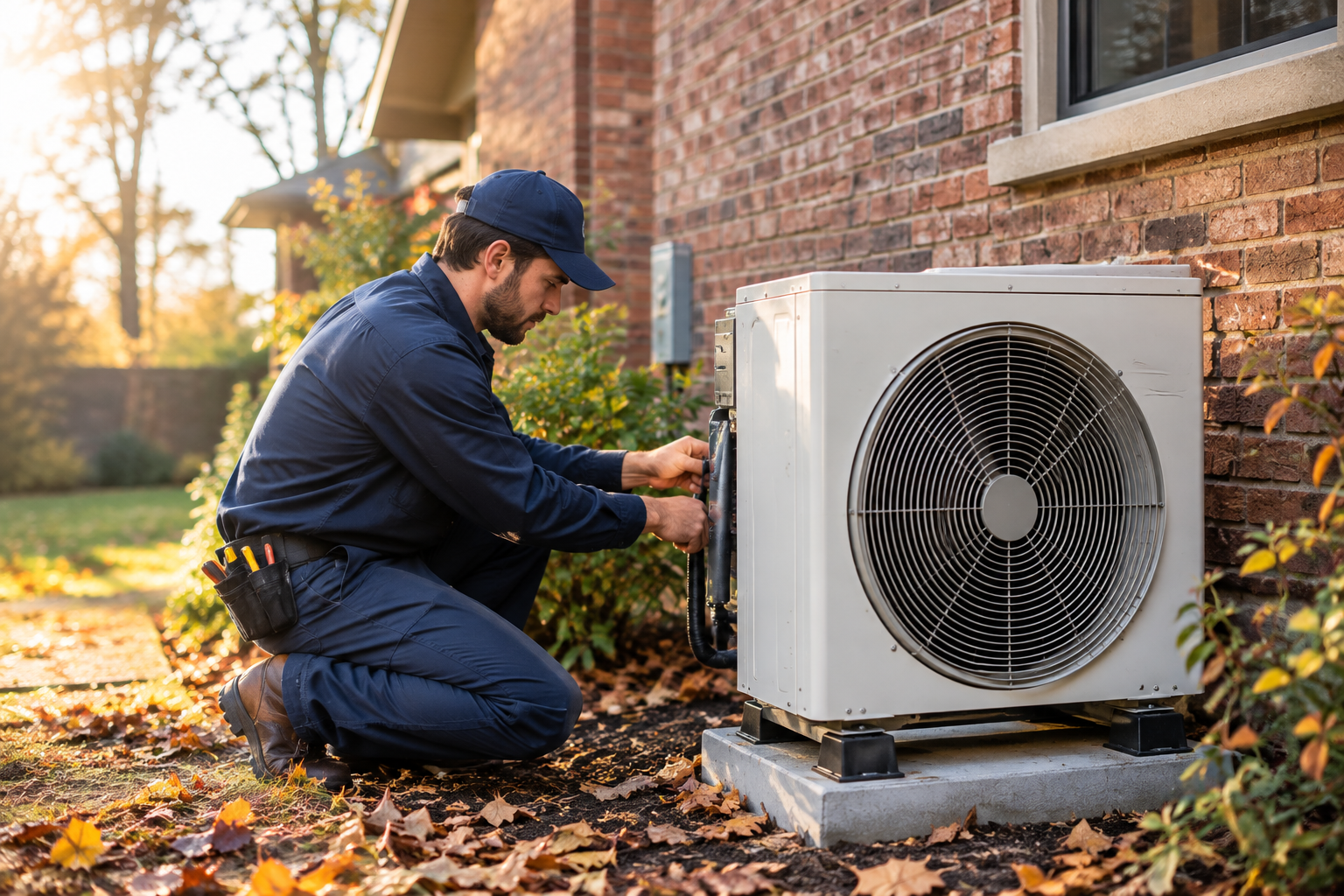
A Bentonville family we worked with last spring had a working gas furnace but an aging central air conditioning system that needed replacement. Rather than replace just the AC, we designed a hybrid system: a new Rheem RP20 heat pump for their outdoor unit paired with their existing gas furnace as the backup. The heat pump now handles their cooling in summer and their heating from fall through early spring. The gas furnace kicks in during January cold snaps. Their combined annual energy bills dropped and they extended the life of their gas furnace by running it only when it genuinely makes sense — perhaps forty to sixty hours per year instead of four hundred.
That's the power of the hybrid approach. And as a Rheem Pro Partner, Breeze Heat & Air installs complete hybrid heat pump systems with the equipment quality and warranty support to back them for the long term.
The Balance Point: What Temperature Should Trigger the Gas Furnace?
The balance point is the outdoor temperature below which it becomes more economical to run the gas furnace than the heat pump. With current NWA utility rates, most hybrid systems are set between 30°F and 38°F. Your HVAC technician should calculate this specifically for your utility rates and your system's efficiency ratings — a generic default is less accurate than a calculation that uses your actual SWEPCO or Arkansas Oklahoma Gas bill.
Modern smart thermostats like the Ecobee SmartThermostat Premium and the Honeywell Home T10 Pro can manage this balance point automatically, adjusting based on real-time utility rate data in some configurations. This isn't science fiction — it's available technology that makes hybrid systems genuinely intelligent rather than just switching at a fixed temperature.
How Do Heat Pumps and Gas Furnaces Compare on Comfort and Air Quality?
Gas furnaces produce hotter supply air — typically 120°F to 140°F — which many NWA homeowners perceive as "more comfortable" even when room temperatures are identical. Heat pumps produce cooler supply air (90°F to 100°F) that heats the room to the same temperature but feels less intensely warm at the vent. This perceived comfort difference is real, but it's often overstated by people who've only experienced one system.
Here's the confession: I used to think furnace heat was inherently more comfortable. Then I spent time in homes with properly sized, properly installed variable-speed heat pumps and reconsidered. The comfort difference people describe is real but narrower than most articles suggest, and it disappears almost entirely with variable-speed heat pump technology.
A standard single-speed heat pump blasts air at 95°F in short cycles. It warms the room, shuts off, and the room cools before the next cycle. That temperature swing is what creates the "drafty" feeling some heat pump owners describe. A variable-speed heat pump runs at lower capacity almost continuously, maintaining much tighter temperature control — often within 0.5°F of setpoint rather than the 2°F to 3°F swing of single-speed equipment. The air feels gentler, more even, and the room stays consistently comfortable.
Air Quality Differences Between the Two Systems
Gas furnaces introduce one air quality risk that heat pumps don't: combustion. A properly maintained gas furnace with an intact heat exchanger poses no indoor air quality concern. But heat exchangers crack. Carbon monoxide is odorless, colorless, and deadly. The Consumer Product Safety Commission attributes roughly 400 deaths per year in the US to unintentional carbon monoxide poisoning, with faulty heating equipment as a leading cause.
This isn't an argument against gas furnaces — it's an argument for proper maintenance and carbon monoxide detectors. But it is a genuine difference. A heat pump has no combustion process and therefore no CO risk from the heating equipment itself.
Both systems share the same ductwork air quality considerations — filter maintenance, duct cleanliness, and humidity management. For NWA homeowners concerned about indoor air quality, our indoor air quality services address duct cleaning, air purification, and humidity control regardless of which heating system you use.
What About Reliability and Maintenance in NWA's Climate?
Gas furnaces are mechanically simpler with fewer moving parts than heat pumps, which some technicians argue makes them more reliable in severe cold. Heat pumps run year-round (heating and cooling), accumulating more operating hours than a furnace. In practice, both systems in NWA need twice-yearly maintenance and have similar lifespans of fifteen to twenty years with proper care.
Here's the nuance that gets lost: a gas furnace only runs during heating season — roughly five to six months in NWA. A heat pump runs twelve months per year for both heating and cooling. If you compare failure rates per year, a heat pump might seem less reliable. But if you compare failure rates per hour of operation, the picture changes considerably. The heat pump is doing twice the work.
The Rheem heat pump systems we install as a Rheem Pro Partner carry a ten-year parts warranty when registered within ninety days of installation. That warranty coverage reflects manufacturer confidence in the equipment's longevity. Rheem's variable-speed EcoNet-enabled heat pumps also include built-in diagnostics that flag potential issues before they become failures — a feature gas furnaces have only recently begun incorporating.
For NWA's climate specifically, the heat pump's defrost cycle is worth understanding from a maintenance perspective. During winter cold spells, the outdoor unit cycles through defrost regularly — this is normal and expected, as we covered in our heat pump not heating guide. The defrost controls (the sensor and board that manage these cycles) are the most common heat pump service item in our region. Annual maintenance that includes defrost system testing prevents the most common winter failures.
Emergency Service Considerations
Both systems fail occasionally. The practical question for an NWA homeowner is: which failure is more dangerous? A gas furnace failure in January means no heat — period — until the repair is made or a part arrives. A heat pump failure in January means the electric backup strips take over, keeping your home warm at higher operating cost while you schedule the repair. From a risk management standpoint, the heat pump's backup heating option provides a meaningful safety net.
Our emergency HVAC service covers both systems, and we maintain parts inventory for Rheem equipment specifically because we install and service it throughout NWA. When equipment fails in a cold snap, the technician who installed it and carries its parts gets there and fixes it faster than a general HVAC contractor.
Heat Pump vs. Gas Furnace: The Head-to-Head Comparison for NWA
Here is the honest, side-by-side breakdown for Northwest Arkansas conditions specifically:
| Factor | Heat Pump | Gas Furnace |
|---|---|---|
| Heating efficiency (35°F–50°F) | Excellent (250–350% COP) | Good (80–98% AFUE) |
| Heating efficiency (below 25°F) | Good–Moderate (120–150% COP) | Good (80–98% AFUE) |
| Cooling capability | Yes — full AC included | No — separate AC required |
| Carbon monoxide risk | None | Possible if poorly maintained |
| Supply air temperature | 90–100°F (feels gentle) | 120–140°F (feels intensely warm) |
| Fuel type | Electricity | Natural gas |
| Fuel price volatility exposure | Electricity rates | Gas market prices |
| Works during power outage | No | Some models with battery backup |
| Annual maintenance | Twice yearly | Twice yearly |
| Expected lifespan | 15–20 years | 15–25 years |
| Serves as cooling system | Yes | No |
| Best NWA hybrid option | Yes — pairs with gas backup | Yes — pairs with heat pump |
The cooling column is worth dwelling on. If you're replacing a gas furnace in NWA, you almost certainly have a central air conditioning system as well. That AC unit ages separately from your furnace. When you install a heat pump, you replace both systems simultaneously — the heat pump handles heating and cooling from a single outdoor unit. For homeowners whose AC is also aging, this consolidation often makes financial sense regardless of the heating comparison.
Is a Heat Pump Right for Older NWA Homes with Existing Ductwork?
Yes, with qualifications. A heat pump's performance depends critically on ductwork condition and sizing. Older NWA homes — particularly those built in the 1970s and 1980s — often have ductwork designed for high-temperature furnace air that may not distribute the cooler heat pump supply air as efficiently. A ductwork assessment before installation is essential.
This is the conversation that gets skipped in most heat pump sales processes, and skipping it leads to dissatisfied homeowners who blame their heat pump for what is actually a duct problem.
Heat pumps produce supply air in the 90°F to 100°F range. Gas furnaces produce 120°F to 140°F supply air. The same ductwork that adequately distributed furnace air may under-deliver heat pump air in certain rooms — particularly rooms far from the air handler or in areas with poor insulation. Before we recommend any heat pump installation, our technicians assess duct condition, measure airflow to each register, and calculate whether the existing distribution system will work with the new equipment.
In some NWA homes — particularly those built before 1985 — we find ductwork that needs sealing, resizing, or reconfiguration before a heat pump installation makes sense. Our ductwork services address exactly this: pressure testing to quantify leakage, sealing, and rebalancing for optimized airflow. A heat pump installed into a properly assessed and sealed duct system performs the way it's rated. One installed into a leaky, undersized duct system disappoints regardless of equipment quality.
What About Homes Without Natural Gas Service?
In some For NWA homeowners in areas without natural gas service — some rural properties around Cave Springs, Elm Springs, and parts of Gravette — the choice is effectively already made. Without gas, your options are electric resistance heat (expensive to operate) or a heat pump (dramatically more efficient). In these situations, the heat pump case is overwhelming, particularly with modern cold-climate equipment.
If you're in a location without gas service and currently running electric resistance baseboard heat, upgrading to a heat pump is one of the highest-ROI HVAC investments available. You're replacing a 100% efficient system with a 250–350% efficient system for your dominant heating conditions. The energy savings are substantial and predictable.
What Incentives Are Available for Heat Pumps in NWA Right Now?
The federal Section 25C tax credit currently allows NWA homeowners to claim 30% of heat pump installation costs, up to $2,000 per year, for qualifying equipment. This applies to systems meeting ENERGY STAR Most Efficient or cold-climate criteria. Consult a tax professional for your specific situation, as eligibility depends on your tax liability. SWEPCO has historically offered rebates on qualifying heat pump installations — check current program availability before your installation date.
Here's the important caveat: incentive programs change. The Section 25C credit was extended and expanded under the Inflation Reduction Act of 2022, but program details, caps, and qualifying equipment specifications can change with legislation. Always verify current incentive availability with your tax professional and your utility company before making purchasing decisions based on projected rebates.
What doesn't change: Rheem equipment installed by a licensed, certified contractor like Breeze Heat & Air (LIC# 15474066) qualifies for manufacturer warranty coverage and is engineered to meet current efficiency standards. The Synchrony Bank financing options we offer through Plan 980 and Plan 933 can bridge the gap between upfront installation cost and the incentives and energy savings that follow.
Frequently Asked Questions: Heat Pump vs. Gas Furnace in NWA
Is a heat pump good enough for NWA winters?
Yes — for most NWA homes and most winter conditions. Standard heat pumps handle temperatures down to the mid-twenties effectively. Variable-speed heat pumps with cold-climate ratings handle the upper teens. For our deepest cold snaps (below 15°F), a hybrid system with gas backup provides complete coverage. We have not installed a heat pump in NWA that left a homeowner without adequate heat when properly sized and installed.
Does a heat pump work in freezing temperatures?
Yes. Modern heat pumps extract heat from outdoor air even when temperatures are below freezing. Standard units function well to approximately 25°F. Mitsubishi H2i Hyper-Heat units, which we install as a Mitsubishi Diamond Dealer, maintain 100% heating capacity at 5°F and operate to -13°F. Our heat pump repair and service team can advise on the right cold-climate rating for your home's location.
Can I convert my existing gas furnace to a hybrid heat pump system?
Often yes. If your existing gas furnace is compatible (typically any furnace with a multi-speed or variable-speed blower, installed within the last ten to twelve years), we can add a heat pump outdoor unit and appropriate controls to create a hybrid system. Your existing gas furnace becomes the backup. This is frequently more economical than full replacement and extends the useful life of working equipment. Call us at 479.318.0107 for a compatibility assessment.
Which system is better for air quality in my NWA home?
Heat pumps eliminate combustion in the heating process, removing any CO risk from the heating equipment itself. Both systems use the same air distribution and filtration. For homeowners with serious indoor air quality concerns, our indoor air quality services add air purification and humidity management that work with either system.
How long does a heat pump last compared to a gas furnace in NWA?
Both systems typically last fifteen to twenty years with proper maintenance. Gas furnaces may occasionally reach twenty-five years, but their efficiency degrades significantly in later years. Heat pumps running year-round accumulate operating hours faster, but modern variable-speed compressors are engineered for high cycle counts. Our Total Breeze Club maintenance membership includes twice-yearly service that catches early failure signs in both system types.
Is it cheaper to heat with a heat pump or gas in NWA?
It depends on current utility rates in your specific location. At typical NWA utility rates, a modern variable-speed heat pump costs less to operate than a gas furnace for heating during moderate temperatures (above 30°F) and comparable during deep cold. A hybrid system optimizes this automatically. We recommend requesting a utility bill analysis before any installation decision.
What happens to my heat pump during a winter power outage?
A standard heat pump requires electricity and won't operate during an outage. A gas furnace with an electronic ignition also requires electricity for the blower. Neither system provides backup heat during extended power outages without a generator. If power outage resilience is a priority, a generator connection — not the choice of heating system — is the right solution. We can advise on generator compatibility during your consultation.
Should I replace just my furnace or the whole HVAC system at once?
If your air conditioner is more than ten years old, replacing both systems simultaneously is almost always the right decision — especially if you're considering a heat pump, which replaces both functions in one system. Installing a heat pump over an aging AC component (condenser, evaporator coil) that may fail in two years means two installation visits and disruption. Our HVAC installation process includes a full system assessment to give you honest guidance on timing.
The Honest Answer: Which System Is Right for Your NWA Home?
Back to that Rogers homeowner who called us in October. After forty-five minutes, here's where we landed: he had natural gas service, his ductwork was in good condition, his home was a 2,400 square foot two-story built in 2003, and he planned to stay for at least another ten years. His old AC was twelve years old..
Our recommendation: a hybrid heat pump system. A new Rheem variable-speed heat pump for the outdoor unit, paired with a new high-efficiency gas furnace as backup. He replaced his aging AC and his failed furnace in a single installation, got a heating system optimized for NWA's mixed-humid winters, and positioned himself to take advantage of the Section 25C tax credit on the heat pump component.
Not everyone gets that same answer. A homeowner in a rural area without gas service gets a different recommendation. A homeowner with a three-year-old furnace gets a different recommendation. A homeowner whose ductwork needs significant work gets a different timeline.
This is why the honest answer to "heat pump vs. gas furnace" is always: it depends on your specific situation, and you deserve a specific answer, not a generic one.
What Breeze Heat & Air won't do is sell you a system because we have inventory to move or because one product has a better margin. We're a Rheem Pro Partner and Mitsubishi Diamond Dealer because those brands earn the designation — not because we're obligated to sell them regardless of fit. Call us at 479.318.0107 or schedule a service appointment and we'll give you the same honest assessment we gave that Rogers homeowner.
I'm curious: what's driving your heat pump vs. furnace question right now? Is it a system that's failing, an energy bill that's climbing, or just curiosity about what's available? Drop your situation in the comments — it helps us know what to write about next, and we answer every question directly.
Breeze Heat and Air — LIC# 15474066 — Rheem Pro Partner — Mitsubishi Diamond Dealer — Serving all of Northwest Arkansas
HVAC Resources for Northwest Arkansas Homeowners
Expert guidance on repairs, replacements, rebates, and maintenance — everything you need to make confident decisions about your home's heating and cooling.