October 7, 2026
What Happens During an HVAC Tune-Up? (What NWA Homeowners Should Expect)
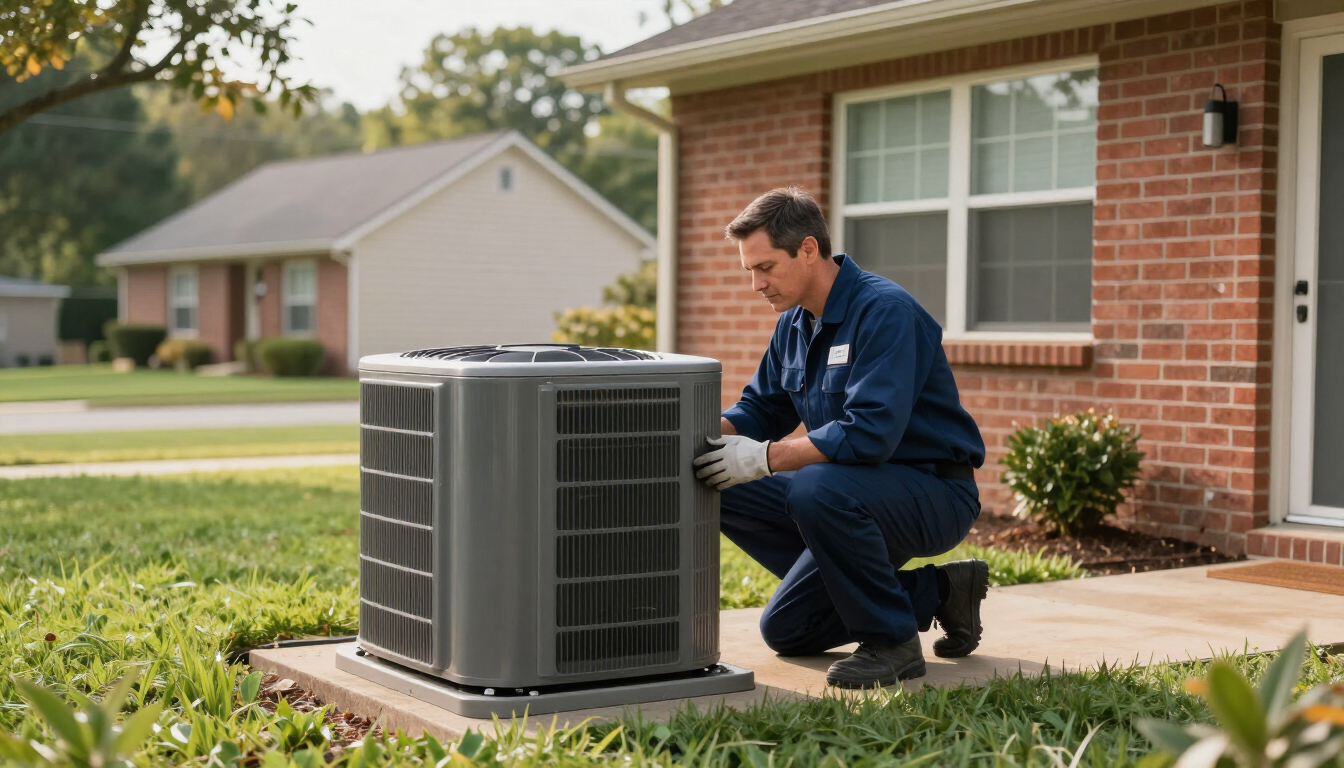
A homeowner in Springdale called us last spring, frustrated. She'd paid for an HVAC tune-up from another company six weeks earlier. The technician was in and out in under 25 minutes, handed her a checklist with every box ticked, and charged her a full service rate. Two weeks later, her system blew warm air on the first genuinely hot day of May. When we came out, we found a condenser coil so fouled with cottonwood fuzz that airflow was nearly zero — something a proper tune-up would have caught and cleaned.
She asked a question we hear constantly: "What exactly is supposed to happen during a tune-up? Because I have no idea if I got what I paid for."
That's the real problem. Most homeowners have no baseline for what a legitimate HVAC maintenance visit looks like. They can't evaluate whether they got 25 minutes of checkbox theater or a genuine 60–90 minute inspection that actually protects their equipment. And contractors who do the minimum count on that information gap to keep their schedules packed and their vans rolling.
This guide exists to close that gap entirely. By the time you finish reading, you'll know exactly what a professional HVAC tune-up covers, step by step. You'll know what questions to ask before scheduling. And you'll know which items matter most for Northwest Arkansas homes specifically — because our climate has some particular demands that generic tune-up checklists don't account for.
Why Does an HVAC Tune-Up Actually Matter in NWA?
An HVAC tune-up is a preventive maintenance visit that inspects, cleans, tests, and calibrates your heating and cooling system before problems develop. In Northwest Arkansas, where systems run hard in both summer heat and winter cold, annual maintenance is the single highest-ROI action a homeowner can take to protect HVAC equipment.
Here's the maintenance reality that most people don't fully appreciate: HVAC systems fail gradually, not suddenly. What looks like a sudden breakdown on a 97°F July afternoon in Fayetteville almost always started with something small — a capacitor weakening over months, a condenser coil losing efficiency through accumulated debris, refrigerant slowly leaking through a developing crack. A technician who knows what to look for catches those early-stage problems. A technician doing 25-minute checkboxes doesn't.
Northwest Arkansas adds specific pressure to this equation. Our summers push systems hard — heat index over 105°F, relative humidity in the 70s, run times that can exceed 16 hours a day during peak heat waves. Our winters bring enough freezing weather to test heat pump performance seriously. Systems that don't receive proper maintenance going into either season face significantly elevated failure risk.
The Department of Energy's own research suggests that regular preventive maintenance can reduce HVAC breakdowns by up to 95% and extend equipment life by several years. That's not a sales statistic — it's the engineering reality of a machine with refrigerant circuits, electrical components, moving parts, and airflow systems that all degrade at different rates.
How Long Should a Real HVAC Tune-Up Take?
A legitimate residential HVAC tune-up should take 60–90 minutes minimum for a standard split system. Larger systems, older equipment, or systems with identified issues may take longer. A visit under 45 minutes almost certainly skipped critical steps.
This is the first thing to know when evaluating any tune-up offer. Time is the honest proxy for thoroughness. A technician cannot properly clean a condenser coil, check refrigerant pressures, test all electrical components, inspect heat exchanger integrity, measure airflow, test capacitors, lubricate moving parts, and document findings in 25 minutes. Physics won't allow it.
When Breeze Heat & Air performs a Total Breeze Club maintenance visit, we block 90 minutes minimum. That's not arbitrary — it's the actual time required to complete every item in our checklist properly. Some of our maintenance visits run longer, particularly on older systems or when we find something that needs attention and documentation.
If a company advertises tune-ups at a deeply discounted rate with rapid scheduling, ask them directly how long the visit typically takes. Their answer tells you most of what you need to know.
What Does a Tune-Up Cover for the Cooling System (AC Side)?
The cooling system inspection includes checking and cleaning the condenser coil, measuring refrigerant pressures, testing the compressor and capacitors, inspecting electrical connections, measuring airflow across the evaporator coil, and verifying the condensate drain system.
Condenser Coil Inspection and Cleaning
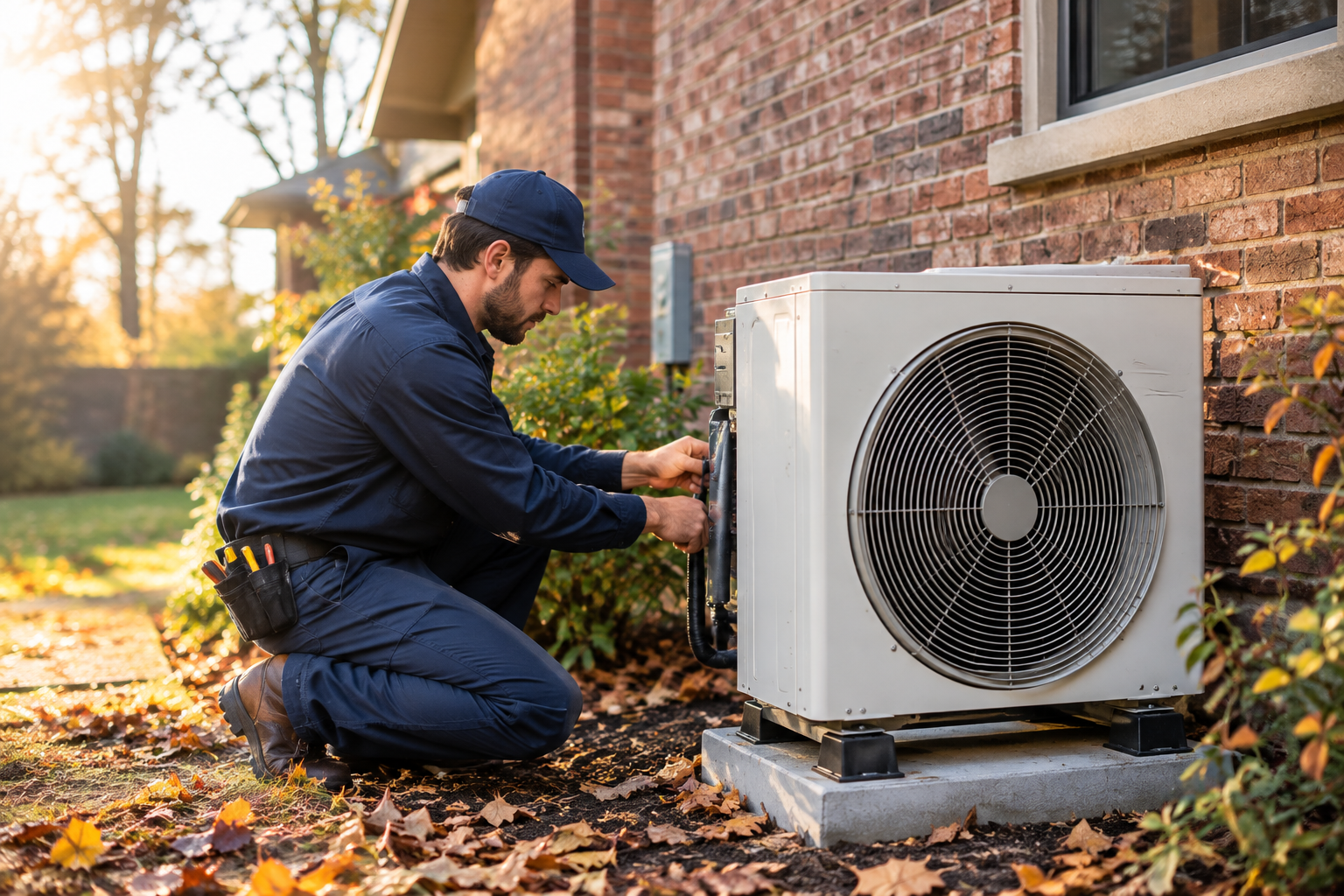
This is where we find the most neglect in NWA homes — and it's not homeowners' fault. The condenser coil (the outdoor unit's aluminum fin array) is invisible from ground level unless you look directly at it. It accumulates cottonwood fuzz from May through July, grass clippings from lawn care, dust, and occasionally biological growth. A heavily fouled condenser coil can reduce system efficiency by 30% or more.
A proper cleaning involves removing the top panel if accessible, washing the coil from the inside out with a professional-grade coil cleaner (not just a garden hose), and inspecting for bent fins that restrict airflow. Fin combs straighten bent fins that a hose rinse alone can't fix.
The Springdale homeowner from our opening — her coil had roughly four inches of compacted cottonwood debris packed against the fins. It took over 20 minutes just to clean it properly. A technician doing a 25-minute full tune-up spent less time on her entire system than we spent on one component.
Refrigerant Pressure Check
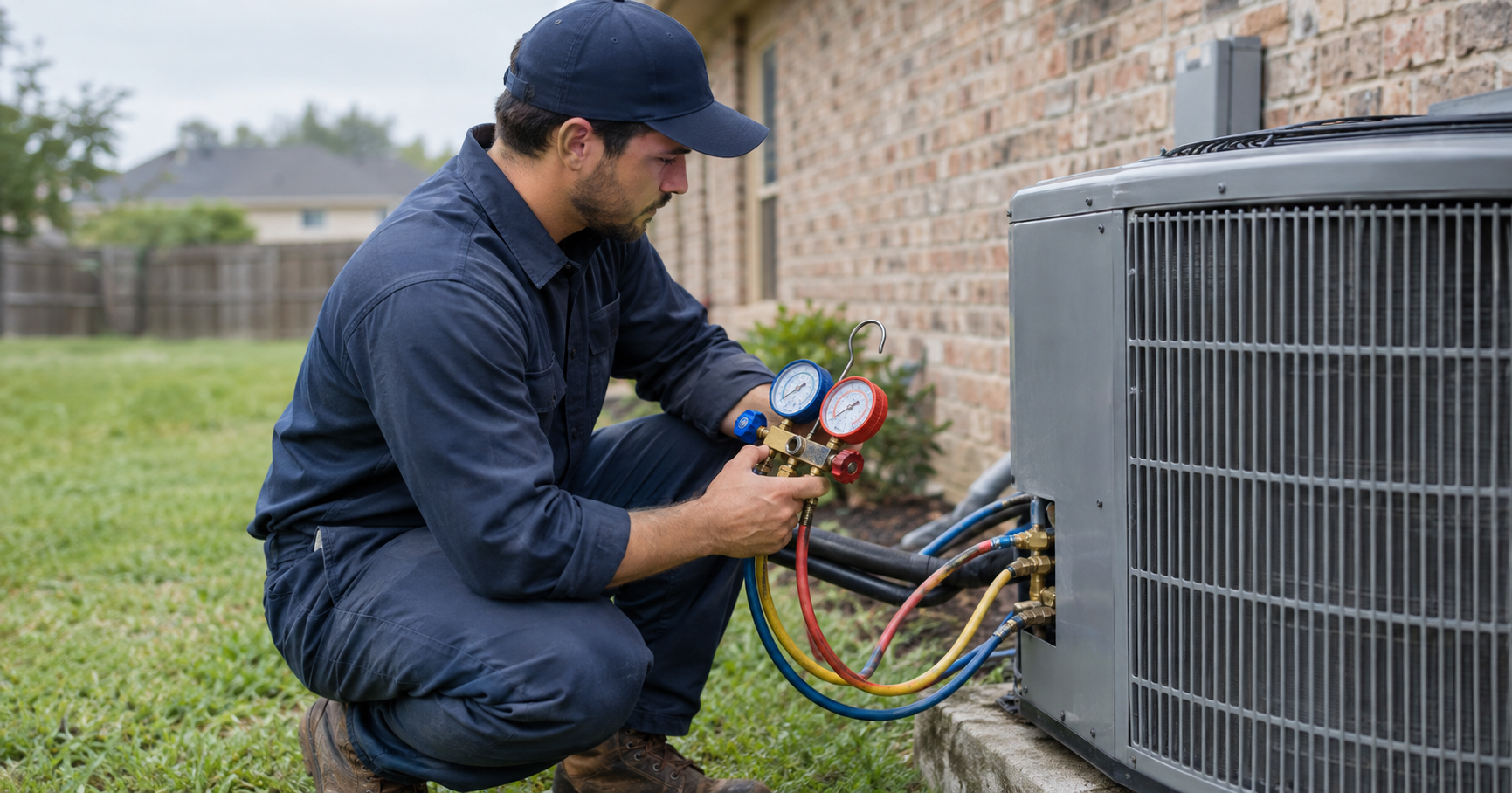
A technician connects manifold gauges to the system's service ports and reads suction and discharge pressures. These readings, compared against the manufacturer's specifications for the current ambient temperature, confirm whether the refrigerant charge is correct.
Refrigerant doesn't get "used up" in a properly functioning system — if pressures are low, there's a leak. Identifying a refrigerant charge issue early, before the system struggles through a July heat wave with a failing compressor, is one of the most valuable things a tune-up provides.
Electrical Component Testing
Capacitors are the single most common component failure in NWA AC systems, primarily because heat accelerates their degradation. A start capacitor helps the compressor begin its cycle; a run capacitor helps it sustain operation. When capacitors weaken, the compressor strains, runs hot, and eventually fails — the most expensive repair in HVAC.
A proper tune-up measures capacitor microfarad values with a capacitance meter and compares them against rated specifications. A capacitor reading 15–20% below its rated value is approaching failure. Replacing it preventively during a tune-up is orders of magnitude cheaper than the emergency call when it fails at 2 p.m. on August 3rd.
Electrical inspection also includes checking all wiring connections for corrosion or looseness, measuring voltage and amperage draw on the compressor and fan motors, and inspecting contactors for pitting or burning.
Condensate Drain System
Your AC system removes moisture from indoor air as it cools — a properly functioning system in NWA's humid summers can pull 5–20 gallons of water out of your air per day. That water drains through a condensate drain line to the exterior or a floor drain. When that drain clogs with algae, debris, or biofilm, water backs up, triggers a safety float switch that shuts the system off, or overflows and damages ceilings and walls.
A proper tune-up flushes the condensate drain with a diluted bleach solution or condensate treatment tablets, inspects the drain pan for cracks or standing water, and confirms the float switch is functioning. In NWA's humidity, this step isn't optional.
What Does a Tune-Up Cover for the Heating System?
The heating system inspection differs significantly based on whether you have a gas furnace, heat pump, or dual-fuel system. Each requires specific checks that have no equivalent on the cooling side — and some, like heat exchanger inspection, have direct safety implications.
Gas Furnace Inspection
Heat exchanger integrity is the most critical — and most commonly skipped — element of furnace maintenance. The heat exchanger is a metal component that separates combustion gases (including carbon monoxide) from the air circulating through your home. When heat exchangers crack — a common failure in furnaces over 15 years old — combustion gases can enter your living space. Carbon monoxide poisoning is the outcome nobody talks about in HVAC maintenance marketing, but it's why this inspection matters.
A proper heat exchanger inspection uses a mirror or camera to visually inspect the exchanger surface, plus a combustion analyzer to check flue gases. A technician who skips this step — and many do because it requires time, the right tools, and uncomfortable conversations if they find something — is leaving you with an unknown safety risk.
Additional furnace checks include measuring gas pressure at the manifold, inspecting the burner assembly for proper flame pattern, testing the igniter, checking the pressure switch and inducer motor operation, and verifying flue venting for obstructions.
Heat Pump Heating Mode Verification
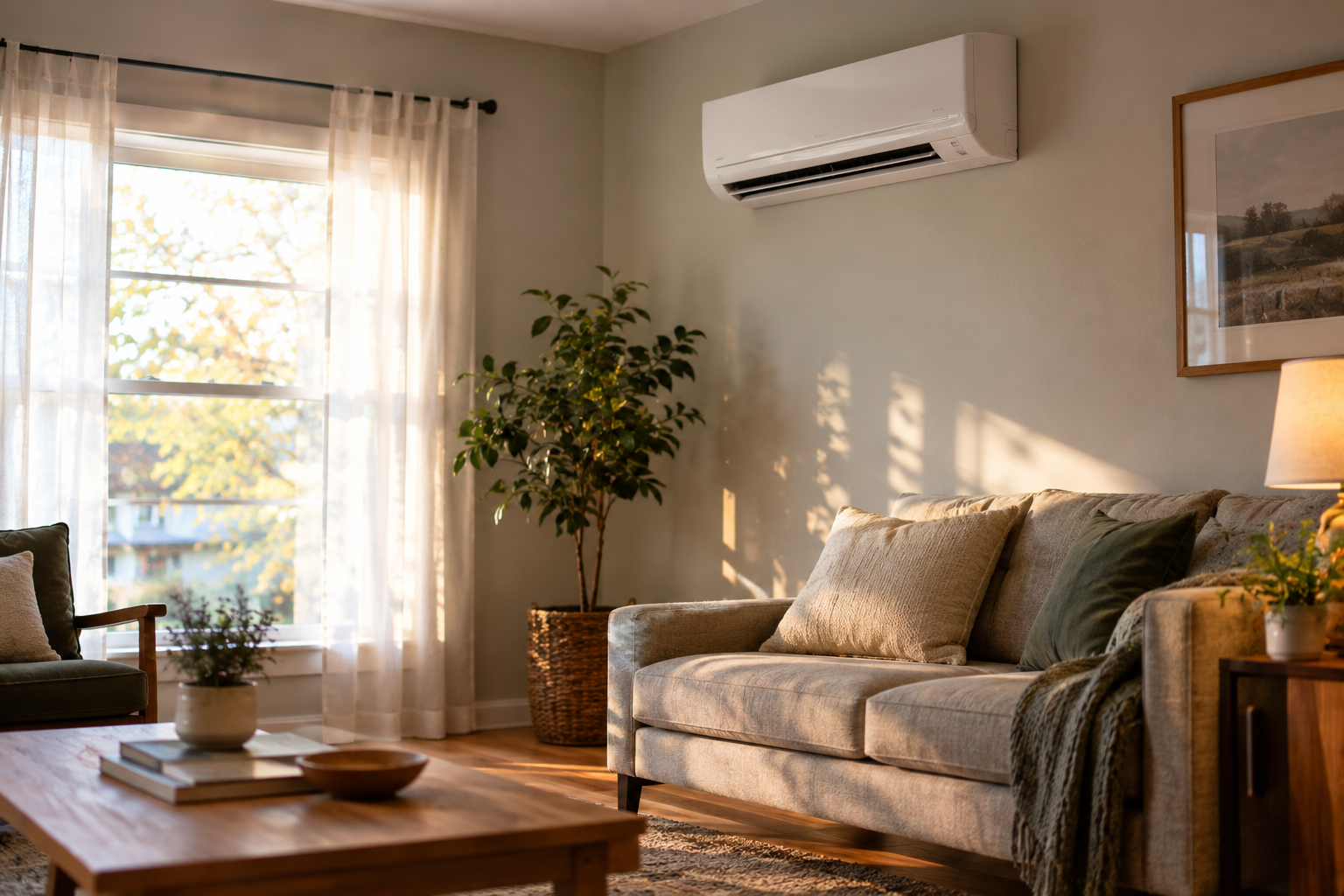
For NWA homes with heat pumps — which Breeze Heat & Air installs as both Rheem and Mitsubishi systems — heating mode verification is essential before winter. The technician reverses the system into heating mode and confirms proper operation: reversing valve function, adequate heating output, defrost cycle activation at appropriate conditions, and auxiliary heat stage engagement.
Mitsubishi H2i Hyper-Heat systems have specific defrost cycle behavior that differs from standard heat pumps. A technician familiar with Mitsubishi equipment (Breeze is an authorized Diamond Dealer) understands what normal defrost behavior looks like vs. a defrost system fault.
What Does the Air Handler Inspection Cover?
The indoor air handler inspection covers blower motor operation, evaporator coil condition, filter status, electrical connections, and airflow measurements. This is where duct system issues and indoor air quality problems often surface first.
Blower Motor and Wheel
The blower motor moves indoor air across the evaporator coil and through your duct system. Over time, the blower wheel accumulates dust and debris on its fins — enough buildup reduces airflow significantly, stresses the motor, and reduces system efficiency. A proper tune-up includes inspecting and cleaning the blower wheel if needed, measuring motor amperage against rated specifications, and lubricating motor bearings where the design allows.
Variable-speed blower motors, found in higher-efficiency Rheem systems, have additional diagnostics available through the control board that can flag developing issues before they become failures.
Evaporator Coil Inspection
The indoor coil sits in the air stream inside the air handler. It accumulates dust, pet dander, and biological growth over time, particularly in NWA's humid environment where the coil surface stays wet during cooling operation. A heavily fouled evaporator coil reduces heat transfer efficiency and can contribute to frozen coil problems.
Access to the evaporator coil for inspection and cleaning varies significantly by equipment design — some are very accessible, others require partial disassembly. A technician doing a rushed visit often skips this inspection entirely. A thorough tune-up at least inspects the coil visually and notes its condition.
Filter Assessment
The technician checks and replaces (or notes for customer replacement) the air filter. More importantly, a good technician checks filter fit — a filter that's slightly the wrong size and allows air bypass around its edges provides almost no filtration value. We've seen brand-new MERV 11 filters installed at an angle, with a quarter-inch gap along one edge, that were doing essentially nothing.
What Gets Documented After a Tune-Up?
A legitimate tune-up produces written documentation of every item checked, measured values from electrical testing and refrigerant pressure readings, any findings or concerns, and specific recommendations with clear priority levels. You should be able to review this documentation and understand your system's current condition..
Here's something honest that few contractors talk about: documentation protects both parties. It protects you by creating a record of what was checked, what was found, and what was recommended. It protects the contractor by demonstrating the scope of work completed. A contractor who hands you a piece of paper with 20 pre-printed checkmarks and no actual measured values isn't documenting — they're performing documentation theater.
When Breeze Heat & Air completes a maintenance visit, the technician's report includes actual capacitor readings (not just "pass/fail"), refrigerant pressure readings with ambient temperature context, motor amperage measurements, and specific notes on any items requiring attention. That data tells you where your system stands today and gives you a baseline for comparison at the next visit.
What Should You Do Before the Technician Arrives?
Three things: replace or note your current filter, clear at least three feet of space around both the outdoor unit and the indoor air handler, and write down any operational observations — sounds, smells, performance differences — you've noticed in the past few months.
The filter question is worth its own paragraph. If you replace it the day before a tune-up, the technician gets a false reading of your current air quality situation. If you haven't replaced it in eight months, tell the technician — that context matters for interpreting the condition of downstream components. Don't try to impress your HVAC technician by running out and putting in a fresh filter the morning of the appointment. Just tell them honestly when you last changed it.
Your operational observations are genuinely useful diagnostic data. That slight grinding sound the system makes on startup that you've been half-ignoring for three weeks? Mention it. The fact that your upstairs bedroom takes an extra hour to reach temperature now that it used to hit in 30 minutes? Write it down. These observations guide a good technician toward where to look more carefully.
When Is the Right Time for an HVAC Tune-Up in Northwest Arkansas?
In NWA, the optimal timing is spring (March through April) for AC tune-ups and fall (October through November) for heating tune-ups — before peak demand season, when technician availability is highest and your equipment is about to face its heaviest load.
Spring tune-ups in NWA make particular sense because cottonwood season runs April through June. If you get your AC tune-up in late March or early April, you're ahead of the worst cottonwood deposits on your condenser coil. Schedule it in late June after a month of cottonwood season and you're scheduling a cleaning of a coil that's already been running with limited airflow.
Fall timing for heating tune-ups follows the same logic — schedule in October before the first freeze events, not in December after your furnace has already run through questionable starts for two months.
The scheduling reality in NWA: July and August are the busiest months for HVAC companies by a significant margin. Emergency calls crowd out preventive maintenance appointments. Technician availability is tightest. If you're scheduling a tune-up in July, you're competing with homeowners experiencing active failures. Total Breeze Club members get priority scheduling, which in July and August is genuinely worth it — we schedule members first before opening the calendar to standard service calls.
What Separates a Great HVAC Tune-Up from a Mediocre One?
The difference is measurement vs. observation. Great tune-ups produce numbers — capacitor microfarad readings, refrigerant pressure data, motor amperage, airflow measurements. Mediocre tune-ups produce checkmarks.
This is the most important distinction to understand as a homeowner. A technician who tells you "everything looks good" after 30 minutes has given you a subjective opinion. A technician who hands you a report showing your run capacitor measured at 6.8 microfarads against a 7.5 microfarad rating — meaning it's 9.3% below spec and trending toward the 20% failure threshold — has given you actionable data.
The other differentiator is honesty about findings. A technician who completes a full inspection and finds nothing of concern should say exactly that, with the data to back it up. A technician who always finds something that needs immediate repair on every visit — magically, for every customer — is not doing you a service. Equally, a technician who never finds anything regardless of system condition isn't looking carefully enough.
At Breeze, we tell customers when their system looks genuinely good and doesn't need anything beyond routine maintenance. We also tell them clearly when something needs attention, why it matters, and what happens if it's deferred. That honesty is the service.
What Happens If the Technician Finds a Problem?
Minor findings — a slightly low capacitor, a dirty coil, a clogged condensate drain — are addressed during the tune-up visit. Significant findings — a developing refrigerant leak, early signs of compressor strain, a cracked heat exchanger — get documented, explained clearly, and quoted for repair so you can decide how to proceed.
The heat exchanger finding deserves specific attention because it's the one that sometimes generates sticker shock and suspicion. When a technician tells you they've found a cracked heat exchanger, homeowners occasionally wonder if they're being upsold toward a replacement. Here's the honest truth: heat exchanger cracks are a real phenomenon in older furnaces, they have genuine safety implications, and a technician has a legal and ethical obligation to disclose them when found. A good technician will show you the crack (or photograph it), explain the safety risk clearly, and give you options — repair if feasible, replacement if the furnace is old enough that repair economics don't make sense.
We encourage every NWA homeowner who receives a significant finding from any contractor to get a second opinion if they're uncertain. An honest finding looks the same whether you get one estimate or three.
Frequently Asked Questions
How often should NWA homeowners get an HVAC tune-up?
Once per year minimum — twice per year (spring for AC, fall for heating) is better for systems that run hard in both seasons. NWA's climate demands both serious summer cooling and real winter heating, making bi-annual maintenance genuinely valuable rather than just a revenue strategy.
Does a tune-up include refrigerant?
No — a tune-up checks refrigerant pressures and identifies whether the charge is correct. If the system is low on refrigerant, that indicates a leak, which is a separate diagnosis and repair. Adding refrigerant without finding and fixing the leak is a temporary fix, not a solution.
Should I get a tune-up on a brand-new system?
Yes, after the first full season of operation. New systems can develop issues with vibration-loosened connections, and the first cooling or heating season gives you a baseline for what your system's pressures and electrical readings look like when new.
What's the difference between a tune-up and a diagnostic?
A tune-up is preventive maintenance performed on a functioning system. A diagnostic is a service call to find the cause of an existing problem. Some contractors blur this line and charge diagnostic rates for tune-ups — they're different services with different scopes and should be priced accordingly.
Can I do any tune-up tasks myself?
Filter replacement and basic condenser rinse with a garden hose are DIY-appropriate. Refrigerant checks, electrical testing, heat exchanger inspection, and anything involving the system's internal components require a licensed technician with proper equipment and EPA 608 certification for refrigerant handling.
Does the Total Breeze Club cover tune-ups?
Yes — our Total Breeze Club maintenance membership includes annual tune-up visits as part of the plan, plus priority scheduling and member discounts on repairs. For homeowners who want the peace of mind of consistent annual maintenance without the friction of remembering to schedule it, the club membership is the most practical option.
What if a technician recommends repairs during my tune-up?
Ask for written documentation of the finding — what was observed, where, and what the recommendation is. Ask specifically what happens if the repair is deferred — timeframe estimate, risk level, impact on other components. A contractor who can't answer those questions clearly is not giving you enough information to make a good decision.
Does an HVAC tune-up improve energy efficiency?
Yes, measurably. The Department of Energy estimates that a dirty air filter alone can increase energy consumption by 5–15%. A fouled condenser coil adds additional efficiency losses. A system running on a weak capacitor draws more amperage for the same output. Addressing all of these in a single tune-up visit typically improves efficiency by 5–20% depending on how neglected the system was.
Can a tune-up void my warranty?
No — regular professional maintenance is required by most manufacturer warranties, not prohibited by them. Rheem's 10-year parts warranty and Mitsubishi's warranty both specify that proper maintenance must be performed. Skipping maintenance is more likely to complicate a warranty claim than a well-documented tune-up visit is.
What should I do after the technician leaves?
Review the documentation they provided. Mark your calendar for the next tune-up. If they noted a filter replacement interval, set a phone reminder. If they recommended a repair, note it and the timeframe they cited so you can follow up before that window closes.
What the Right Tune-Up Actually Buys You
The Springdale homeowner from our opening got a second tune-up from Breeze six weeks after the rushed job from the other company. The visit took 85 minutes. We cleaned a condenser coil that had already been "serviced," found a run capacitor at 81% of rated value (replacement recommended, not urgent), flushed a partially clogged condensate drain, and documented her refrigerant pressures as correct. She went into the summer with a system that actually performed.
That's what a real tune-up buys: confidence going into the hardest season your system will face. Not a piece of paper with checkmarks. Actual knowledge of where your equipment stands.
Northwest Arkansas HVAC systems that receive proper annual maintenance outlast neglected systems by years. They have fewer emergency breakdowns. They maintain efficiency longer. The economics are straightforward — preventive maintenance extends equipment life and reduces repair frequency.
Call Breeze Heat & Air at 479.318.0107 or schedule your tune-up online. We serve all of Northwest Arkansas — Fayetteville, Rogers, Bentonville, Springdale, Tontitown, Lowell, Farmington, Cave Springs, Siloam Springs, Pea Ridge, Gravette, Prairie Grove, Johnson, and Elm Springs — with licensed technicians (LIC# 15474066) and documented, thorough maintenance visits. .
When did you last have a tune-up? And did you get actual measured values in the report, or just a checklist? Drop your experience in the comments — we read every one.
Breeze Heat and Air — LIC# 15474066 — Rheem Pro Partner — Mitsubishi Diamond Dealer — Serving all of Northwest Arkansas
HVAC Resources for Northwest Arkansas Homeowners
Expert guidance on repairs, replacements, rebates, and maintenance — everything you need to make confident decisions about your home's heating and cooling.