September 4, 2026
Heat Pump vs. Central AC in NWA: Which One Actually Saves You More Money?
The Question Behind the Question
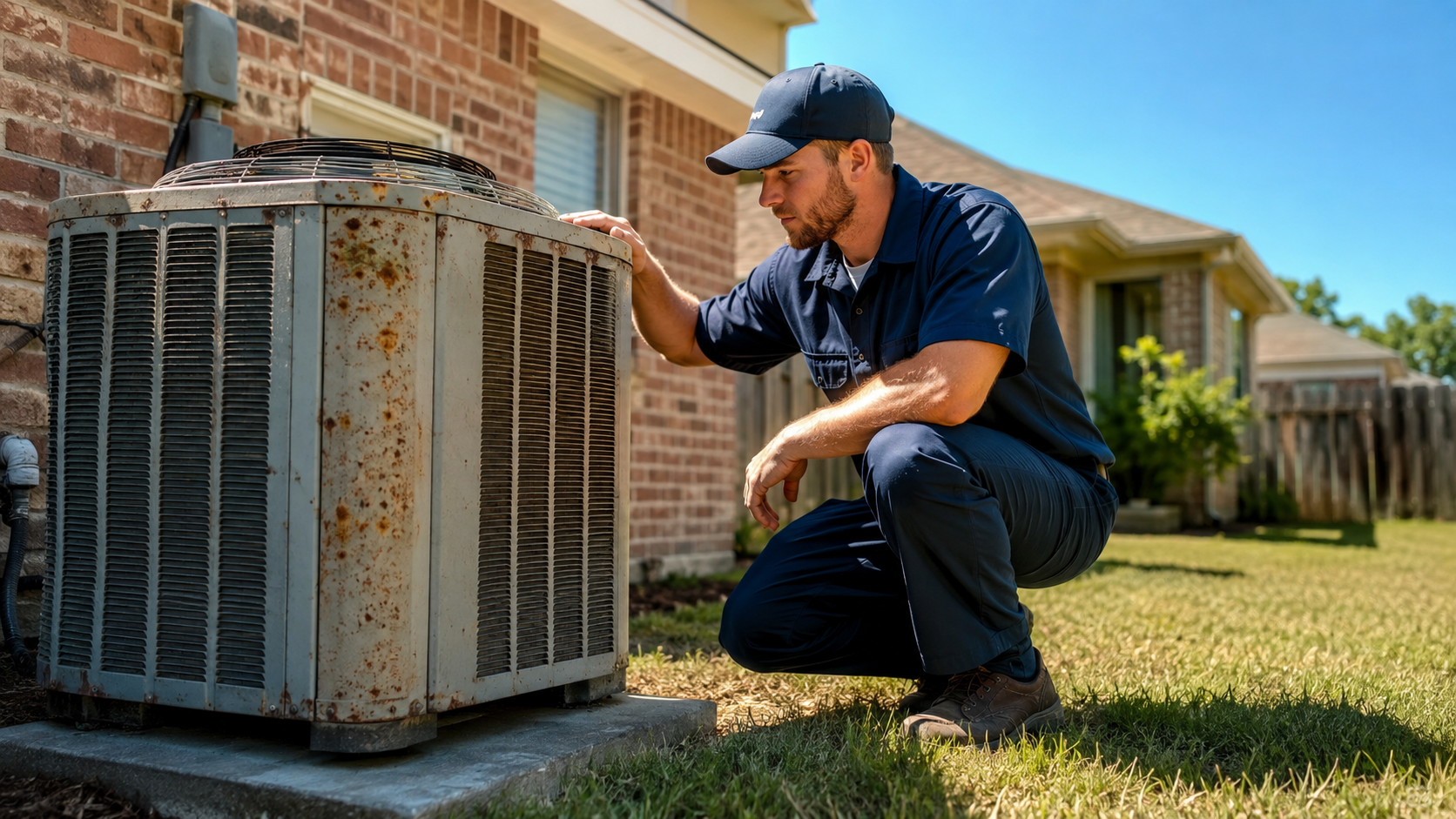
A homeowner in Rogers called us last April. His 17-year-old gas furnace and 14-year-old central AC were both failing simultaneously — the compressor was on its way out and the furnace heat exchanger had a crack we found during the diagnostic. He was facing replacement of both systems at once and wanted to know whether to replace like-for-like or make the switch to a heat pump.
His contractor neighbor had already told him heat pumps "don't work in Arkansas winters." His brother-in-law in Fayetteville had gone heat pump two years earlier and claimed it cut his energy bills significantly. His wife had read that the federal tax credit made heat pumps a no-brainer — which was accurate in 2025 but no longer true in 2026. And a competing HVAC company had quoted him a heat pump system that was $2,400 more than a central AC and gas furnace combination.
He had five different data points and none of them were helping him make a decision.
We spent 45 minutes at his kitchen table working through the actual numbers for his specific home — square footage, gas price per therm, SWEPCO electricity rate, heating degree days in NWA, and the specific efficiency ratings of the equipment we were comparing. By the end of the conversation, the decision was clear. Not because heat pumps are always better or because central AC and gas furnaces are always better — but because the right answer depends on factors that are specific to Northwest Arkansas, and most of the information he had received was not NWA-specific.
That kitchen table conversation is what this guide is. Real numbers. Real NWA climate data. Honest analysis of both options. No sales pitch for either side.
You will discover how heat pumps and central AC systems actually differ mechanically, why NWA's Climate Zone 4A creates a genuinely different calculation than most national guides assume, what the real installed cost difference is in the NWA market right now, how the operating cost math runs at current Arkansas electricity and natural gas prices, what SWEPCO rebates do to the economics, and the three specific scenarios where each system clearly wins.
How These Systems Actually Work — The Mechanical Reality That Drives the Cost Difference
Most homeowners understand what central AC does. Far fewer understand what a heat pump does differently — and that misunderstanding is responsible for most of the bad advice floating around NWA neighborhoods.
A central air conditioner does one thing: it removes heat from your home's interior air and dumps it outside. The refrigerant cycle absorbs heat at the evaporator coil inside, carries it to the condenser coil outside, releases it into the outdoor air, and repeats. The system only moves heat in one direction — out of the house. For heating, a central AC system requires a separate heat source — typically a gas furnace, an electric furnace, or electric resistance heat strips.
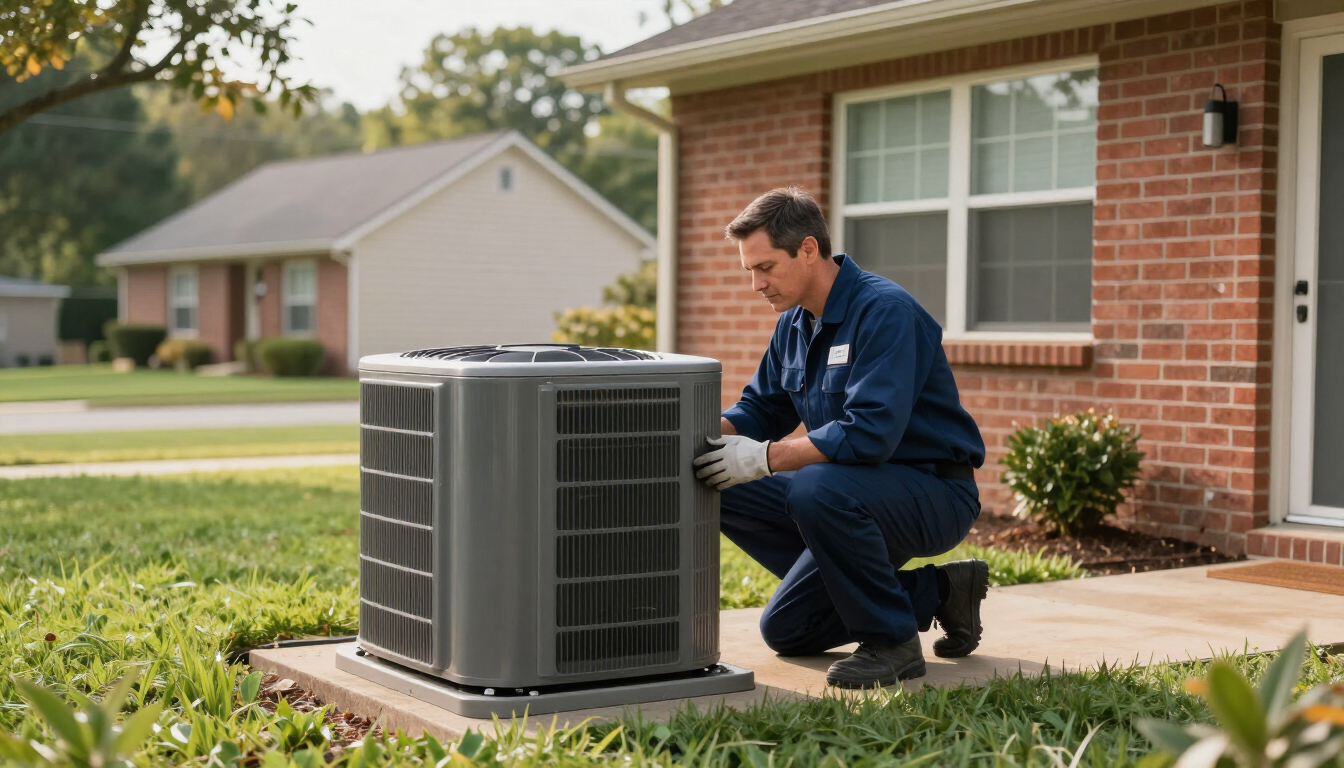
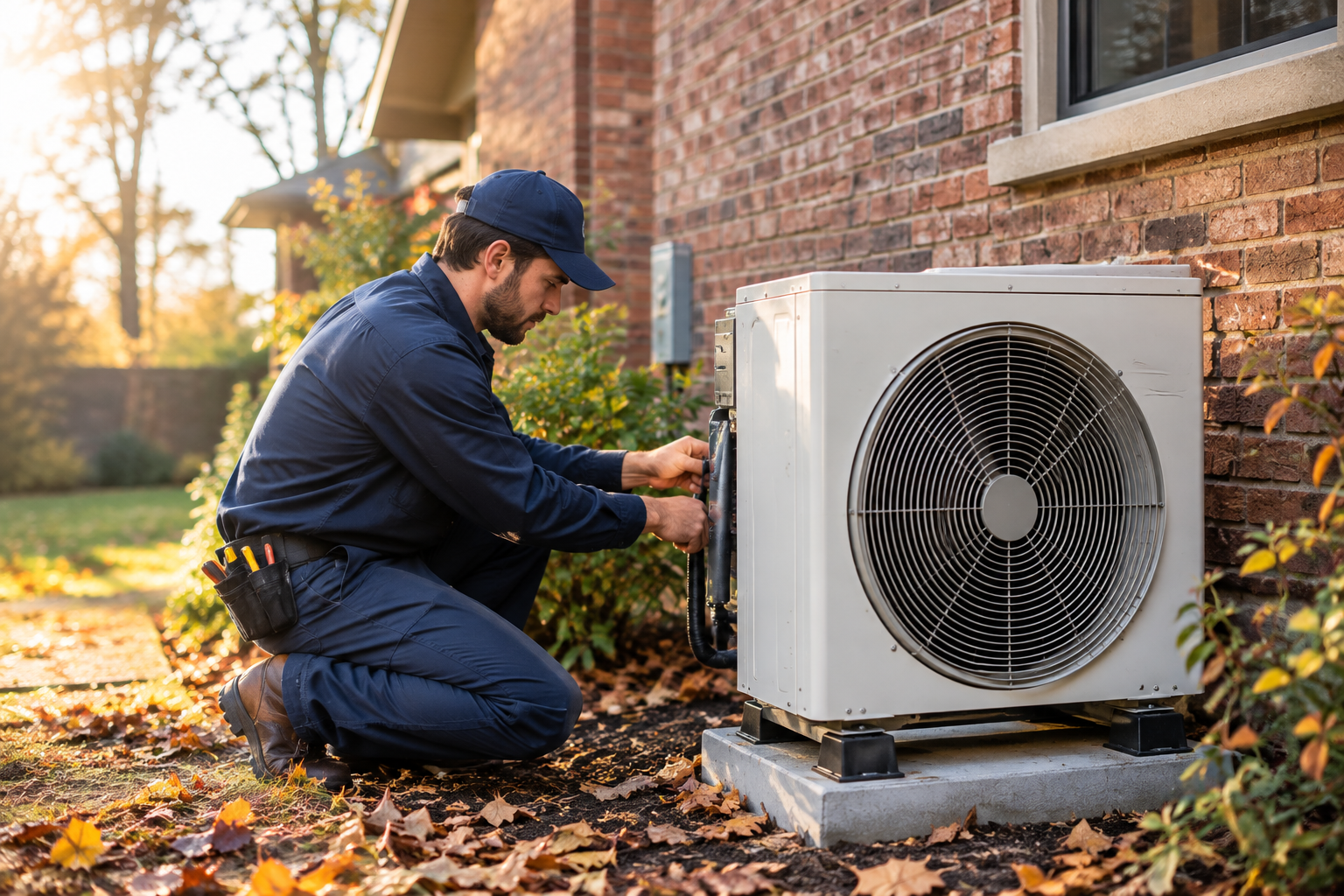
A heat pump does the same thing as a central AC system — with one critical difference. It can reverse the refrigerant cycle. In cooling mode, it operates identically to a central AC, moving heat from inside to outside. In heating mode, it reverses direction — extracting heat energy from outdoor air and moving it inside your home. The same equipment that cools your Rogers home in July heats it in January. One system doing two jobs.
Here is the insight that surprises most NWA homeowners: outdoor air at 35 degrees Fahrenheit still contains significant heat energy. A heat pump does not generate heat — it moves heat that already exists in the outdoor air, concentrating it and transferring it inside. A system with a COP (Coefficient of Performance) of 3.0 at 35 degrees produces 3 units of heat energy for every 1 unit of electrical energy it consumes. By comparison, an electric resistance heater — like heat strips — has a COP of exactly 1.0. A 96% AFUE gas furnace converts 96 cents of every dollar of gas cost into heat. A heat pump at COP 3.0 delivers the equivalent of 300% efficiency. That efficiency advantage is the foundation of the entire financial case for heat pumps.
The complication — and the source of the "heat pumps don't work in Arkansas winters" myth — is that heat pump efficiency decreases as outdoor temperature drops. A system producing COP 3.5 at 47 degrees produces COP 2.5 at 30 degrees and COP 1.75 at 5 degrees. At some outdoor temperature — called the balance point — the heat pump's efficiency advantage over gas disappears or reverses. Where that balance point falls, and how often NWA temperatures drop below it, determines whether a heat pump makes financial sense for heating in Northwest Arkansas.
The answer, as we will show you with real Fayetteville temperature data, is that NWA's climate is genuinely well-suited for heat pumps — with one important equipment specification caveat that most HVAC companies do not tell you about.
The NWA Climate Reality — What the Data Actually Shows
Here is the thing about the "heat pumps don't work in Arkansas winters" argument: it is based on a misunderstanding of what NWA winters actually look like — and what modern heat pump equipment is actually capable of.
The National Weather Service's 76-year temperature record for Fayetteville tells a specific story. The average January temperature in Fayetteville is approximately 35.5 degrees Fahrenheit, based on records from 1950 through 2025. Average winter lows in December sit at 28.6 degrees. The warmest January on record was 44.9 degrees in 2006. The coldest was 23.7 degrees in 1979.
What this data means practically: the vast majority of NWA heating hours occur at temperatures above 25 degrees Fahrenheit. Extended periods below 15 degrees are rare — they happen, but they are not the norm that should define your equipment selection. The temperature range where heat pumps operate at their highest efficiency — above 30 degrees — describes the bulk of NWA's winter heating load.
The honest caveat: NWA does get cold snaps. The Polar Vortex events of recent winters brought temperatures into the single digits in Fayetteville, Rogers, and Bentonville. February 2021 was brutal across the region. These events happen roughly once every several years, and they are the conditions that fuel the "heat pumps don't work" narrative.
Here is what that narrative gets wrong. It conflates standard heat pumps — which do lose significant capacity below 15 to 20 degrees — with cold-climate heat pumps, which are a different product category designed specifically for subfreezing operation. Modern cold-climate heat pumps from Mitsubishi (Hyper-Heat series), Rheem (Prestige cold-climate series), Bosch, and Daikin maintain rated heating capacity down to 5 degrees Fahrenheit and continue operating to minus 13 degrees Fahrenheit or lower. Mitsubishi's Hyper-Heat rated at 36,000 BTU still delivers over 24,000 BTU at 5 degrees — enough to heat most NWA homes through a polar vortex event.
Since Breeze Heat and Air carries both Rheem's cold-climate heat pump lineup as a Pro Partner and Mitsubishi's Hyper-Heat systems as a Diamond Dealer, we can offer NWA homeowners equipment specifically rated for our climate's coldest days — not just its typical winter temperatures. That equipment specification distinction changes the NWA heat pump conversation entirely.
NWA sits in ASHRAE Climate Zone 4A — mixed-humid. According to HVAC climate authorities, Zone 4A installations require heating performance to receive equal weight alongside cooling efficiency. HSPF2 (Heating Seasonal Performance Factor 2) minimum of 7.5 applies to heat pumps qualifying for the SWEPCO rebate program in this zone. Properly sized and specified cold-climate heat pumps in Zone 4A perform efficiently year-round — not just in the mild months.
The Installed Cost Reality in NWA in 2026 — What You Actually Pay
Let us get into specific numbers, because the installed cost comparison between a heat pump and a central AC plus gas furnace system is more nuanced than most guides acknowledge.
The most common mistake homeowners make when comparing quotes is comparing a heat pump against only the central AC side of the equation. A heat pump replaces both your air conditioner and your heating system in one unit. The fair comparison is heat pump installed cost versus central AC installed cost plus gas furnace installed cost.
Central AC only replacement (NWA, 2026):
A standard 3-ton, SEER2 16 central AC replacement for a typical 1,600-to-2,200 square foot NWA home runs $5,500 to $7,500 installed. This covers the outdoor condenser, indoor coil or air handler, installation labor, refrigerant charge, and permits.
Gas furnace only replacement (NWA, 2026):
A standard 80,000 BTU, 96% AFUE gas furnace replacement runs $2,500 to $4,500 installed — covering the furnace unit, venting, and installation labor.
Combined central AC plus gas furnace system:
$8,000 to $12,000 for both systems installed together in the same project, often on the lower end when done simultaneously by the same contractor.
Heat pump system (NWA, 2026):
A 3-ton, SEER2 17.1 to 19.95 cold-climate heat pump for a comparable NWA home runs $6,500 to $10,000 installed — covering the outdoor heat pump unit, indoor air handler, installation, refrigerant, and permits.
The installed cost comparison after SWEPCO rebates:
This is where the economics shift significantly. SWEPCO's 2026 REIP program pays $400 per ton at SEER2 17.1 to 19.94, and $500 per ton at SEER2 19.95 and above, for qualifying heat pump installations. On a 3-ton system at mid-tier efficiency:
Heat pump installed cost: $7,500 to $8,500 mid-range SWEPCO rebate at $400/ton (3 tons): minus $1,200 Net heat pump cost after rebate: $6,300 to $7,300
Central AC plus gas furnace combined: $8,000 to $12,000 SWEPCO rebate on central AC only: $0 (central AC-only systems do not qualify for the REIP heat pump rebate) Net combined system cost: $8,000 to $12,000
After SWEPCO rebates, a qualifying heat pump installation is frequently cost-competitive with or less expensive than a combined central AC and gas furnace replacement — before we account for a single dollar of operating cost difference. For homeowners whose furnace is also at or near end of life, the financial case for heat pump shifts from "pays back over time" to "costs less upfront on a net basis."
Our NWA HVAC Rebates 2026 guide covers the complete SWEPCO rebate process — including the critical pre-installation reservation requirement that catches homeowners off guard.
The Operating Cost Math — Running the Real Numbers for NWA
This is the section that actually answers the "which saves more money" question — and it requires NWA-specific inputs, not national averages.
The key variables for the NWA operating cost calculation are:
Arkansas average electricity rate: 14.36 cents per kilowatt-hour (EIA, May 2026). SWEPCO NWA customers pay approximately 15.43 cents per kilowatt-hour. Arkansas average residential natural gas rate: approximately $1.10 to $1.30 per therm as of mid-2026 (EIA data — Arkansas benefits from proximity to natural gas production in the Fayetteville Shale). NWA cooling season: approximately 6 months, late April through October. NWA heating season: approximately 4 months of meaningful heating demand, November through March, with December through February being the peak heating period.
Cooling cost comparison:
Both a heat pump and a central AC system operate identically in cooling mode. The efficiency comparison is SEER2 rating versus SEER2 rating. A heat pump at SEER2 17.1 and a central AC at SEER2 17.1 cost identically to operate for cooling. For NWA homeowners, the cooling season is 6 months — so even a small SEER2 advantage compounds meaningfully over the year. The question of which saves more on cooling comes down entirely to which efficiency rating you purchase, not which system type you choose.
Heating cost comparison — where the real difference lives:
This is the calculation that determines the overall winner for NWA homeowners. Consider a typical 2,000 square foot NWA home requiring approximately 50 million BTU of heating energy per season (a reasonable estimate for NWA's climate zone and that home size).
Gas furnace at 96% AFUE, natural gas at $1.20/therm: 50 million BTU needed ÷ 0.96 AFUE efficiency = 52.1 million BTU of gas consumed 52.1 million BTU ÷ 100,000 BTU per therm = 521 therms per season 521 therms × $1.20/therm = $625 per heating season
Heat pump at average seasonal COP of 2.5 (realistic for NWA's winter temperature distribution with a cold-climate unit): 50 million BTU needed ÷ 3.41 BTU per watt-hour ÷ COP 2.5 = 5,848 kilowatt-hours per season 5,848 kWh × $0.1543/kWh (SWEPCO rate) = $902 per heating season
At current NWA rates — with Arkansas natural gas prices among the lowest in the South due to Fayetteville Shale proximity — the gas furnace wins on heating operating cost by approximately $277 per heating season. That is the honest number. Anyone who tells you a heat pump always saves money on heating in Arkansas without running location-specific rate math is not giving you the complete picture.
However — and this is where the analysis has to go further:
The above comparison assumes the heat pump replaces only the gas furnace heating function. When the full picture includes the cooling season as well, and when the heat pump replaces both the AC and furnace:
A homeowner replacing only a failing central AC and keeping a relatively new gas furnace has a different calculation than a homeowner whose furnace and AC are both at end of life simultaneously. For the latter — which describes a significant portion of NWA homes from the 2000s construction era — the combined system math favors the heat pump when SWEPCO rebates are factored in.
The crossover point: as natural gas prices rise above $1.50 to $1.80 per therm — which has happened multiple times in the past five years during supply disruptions — the heat pump's operating cost advantage over gas flips positive. At $1.80/therm:
Gas furnace: 521 therms × $1.80 = $938 per heating season Heat pump: same $902 per heating season
Above $1.80/therm, the heat pump wins on heating cost. Natural gas price volatility — not current average prices — is a real risk factor in the 10-to-15-year operating cost calculation.
The Dual-Fuel Option — The NWA Answer Most HVAC Companies Skip
Here is the solution that handles NWA's specific climate situation better than either a heat pump alone or a central AC plus gas furnace alone — and almost nobody in NWA is talking about it.
A dual-fuel system pairs a heat pump with a gas furnace backup. The system operates as a heat pump for the vast majority of heating hours — when outdoor temperatures are above the economic balance point of approximately 35 to 40 degrees, where the heat pump's efficiency advantage over gas is clear. When outdoor temperatures drop below that balance point, the system automatically switches to the gas furnace for supplemental or primary heating.
This configuration captures the best of both systems. You get heat pump efficiency for the 85 to 90 percent of NWA heating hours that occur above 35 degrees — the bulk of November, much of December and February, and all of March. You get gas furnace reliability and power for the genuinely cold days — the January cold snaps where temperatures drop into the teens and single digits — without depending on heat pump performance in conditions where its efficiency degrades.
The dual-fuel system installs at a cost between a heat pump alone and a combined central AC plus gas furnace — roughly $9,000 to $13,000 installed in the NWA market. It qualifies for SWEPCO heat pump rebates on the heat pump component, which can recover $750 to $1,500 depending on efficiency tier and system size. And it eliminates the legitimate concern about heat pump performance in NWA's coldest weather while still capturing the efficiency benefit across the majority of heating hours.
For NWA homeowners who are genuinely torn between heat pump and gas furnace, dual-fuel is the answer we find ourselves recommending most often. It is the configuration that best fits Climate Zone 4A's unique combination of warm, humid summers and cold winter extremes. Our HVAC Installation page covers what a proper load calculation and system design looks like when we evaluate dual-fuel options for a specific NWA home.
The Three Scenarios Where Heat Pump Clearly Wins in NWA
Based on NWA's specific climate, rate environment, and rebate landscape in 2026, here are the three scenarios where a heat pump is the objectively better financial choice.
Scenario 1: Both your AC and furnace need replacement simultaneously.
This is the Rogers homeowner from our opening. When both systems are at end of life at the same time, the installed cost comparison changes dramatically. The heat pump's cost of $6,500 to $10,000 installed is compared not just against the central AC but against the combined replacement of central AC and gas furnace — which runs $8,000 to $12,000. After SWEPCO rebates, the heat pump frequently costs the same as or less than the two-system replacement. The operating cost math runs over one system's lifespan rather than two separate replacements. This scenario favors the heat pump.
Scenario 2: You currently heat with electric resistance — baseboard heaters or heat strips.
If your home currently heats with electric strip heaters, baseboard heaters, or an electric furnace, switching to a heat pump is one of the highest-return energy investments available in NWA. Electric resistance heat has a COP of 1.0 — exactly 1 unit of heat output per unit of electricity. A heat pump at COP 2.5 to 3.5 delivers 2.5 to 3.5 times the heat output for the same electricity cost. Homeowners switching from electric resistance to a heat pump typically see 30 to 60 percent reductions in heating costs. Additionally, SWEPCO's electric resistance to heat pump conversion rebate pays $600 per ton — the highest tier in the entire REIP program. A 3-ton conversion earns $1,800 in SWEPCO rebates. This scenario strongly favors the heat pump.
Scenario 3: You prioritize energy cost stability over minimizing current year operating cost.
Natural gas prices in Arkansas have been favorable recently due to Fayetteville Shale proximity. But natural gas prices have also spiked multiple times in the past decade — the February 2021 winter storm event caused gas price spikes that shocked homeowners across the South. A heat pump locks your heating and cooling costs to electricity — a more stable, predictable cost that also benefits from any future rate reductions as the grid adds renewable generation. For homeowners planning to stay in their home 10 or more years, hedging against natural gas price volatility is a legitimate financial consideration that favors the heat pump.
The Three Scenarios Where Central AC Plus Gas Furnace Still Makes Sense in NWA
The honest guide has to include this section. There are legitimate situations where staying with a central AC and gas furnace combination is the better financial choice for NWA homeowners.
Scenario 1: Your AC is failing but your gas furnace is relatively new.
If your furnace is 5 to 8 years old and in good condition, replacing it alongside your AC to accommodate a heat pump does not make financial sense. You would be scrapping a functioning, warranted piece of equipment to save on a system-level operating cost that may not recover the sunk cost within the heat pump's lifespan. In this case, replace only the failing AC with a high-efficiency central AC unit — SEER2 16 or above to qualify for any available efficiency incentives — and revisit the heat pump decision when the furnace approaches end of life.
Scenario 2: Your home has natural gas infrastructure that is paid for and functional.
Homes with gas lines, gas water heaters, and functional gas furnace systems have existing infrastructure that has already been paid for. Switching to all-electric heat pump — removing the gas line — eliminates that infrastructure value and adds a monthly gas connection fee back if you keep other gas appliances. The financial case for full electrification makes more sense when the gas infrastructure genuinely needs replacement or when gas prices in your area are significantly higher than NWA's current favorable rates.
Scenario 3: Budget constraints make the upfront premium prohibitive.
Even after SWEPCO rebates, there are configurations where a heat pump costs more upfront than a central AC-only replacement. For homeowners facing a failing AC with a functional furnace and tight budget constraints, the right answer is replacing only what is failing. A SEER2 16 central AC replacement at $5,500 to $7,500 installed addresses the immediate problem and preserves the option to transition to heat pump at the next replacement cycle when rebate programs, incentives, and equipment have further evolved. Financing through Synchrony Bank can change this calculation for homeowners who want to move to heat pump now but need flexible payments to make it work.
Mitsubishi Hyper-Heat vs. Rheem Cold-Climate Heat Pumps — What NWA Homeowners Should Know
Since Breeze Heat and Air is both a Mitsubishi Diamond Dealer and a Rheem Pro Partner, we have direct experience with both product lines in NWA's specific climate. Here is an honest comparison of the two options for NWA homeowners.
Rheem's cold-climate heat pump lineup — available in the Prestige and Classic Plus series with cold-climate specifications — offers strong SEER2 ratings at competitive installed costs for NWA's market. Rheem systems installed through a Pro Partner contractor like Breeze carry a 10-year parts warranty when registered within 90 days of installation. For NWA homes with standard ductwork configurations and typical winter temperature profiles, Rheem's cold-climate options deliver excellent value and full SWEPCO rebate eligibility.
Mitsubishi's Hyper-Heat series represents the premium cold-climate option — maintaining rated capacity down to 5 degrees Fahrenheit and continuing to operate to minus 13 degrees. The Hyper-Heat is the appropriate specification for NWA homes concerned about polar vortex performance, for homes in higher-elevation areas of Washington and Benton counties that see colder winter temperatures, and for homeowners who want maximum performance assurance across any NWA winter scenario. The Hyper-Heat is available in both ducted and ductless mini-split configurations — giving NWA homeowners the option of zoned heat pump comfort in spaces their existing duct system does not reach. Our Mini-Splits service page covers where ductless heat pump configurations make the most sense in NWA homes.
How to Evaluate Your Specific NWA Home — The Four Questions That Determine the Answer
The heat pump versus central AC decision for NWA homeowners comes down to four specific questions. Work through these before calling any contractor for quotes.
Question 1: Is my gas furnace also at or near end of life?
If yes — combined replacement cost math applies, and heat pump economics improve significantly. If no — replacing only the failing AC with central AC makes more sense for now.
Question 2: What is my current heating fuel source?
Electric resistance? Heat pump wins decisively on both cost and SWEPCO rebate tier. Natural gas? The economics are closer and depend on your specific usage and rate. Propane or heating oil? Heat pump almost certainly wins on operating cost — propane and heating oil deliver BTUs at 2 to 4 times the per-BTU cost of natural gas.
Question 3: Am I a SWEPCO customer?
If yes — SWEPCO rebates of $750 to $2,400 apply to qualifying heat pump installations, fundamentally changing the installed cost comparison. If you are served by Carroll Electric, Entergy, or another NWA utility, rebate amounts and availability differ and should be confirmed before your decision.
Question 4: How many more years do I plan to stay in this home?
The heat pump's operating cost advantage compounds over time. A homeowner planning to stay 15 years captures the full efficiency benefit across the system's lifespan. A homeowner planning to sell in 3 to 5 years may not recover the premium through operating savings — though heat pump equipment is increasingly valued by NWA buyers and may support a higher sale price.
Our HVAC Installation service page covers what a complete system evaluation looks like when we work through these questions for a specific NWA home.
Frequently Asked Questions About Heat Pump vs. Central AC in NWA
Do heat pumps actually work in NWA winters?
Standard heat pumps lose efficiency below 25 to 30 degrees and struggle below 15 degrees. Cold-climate heat pumps — Mitsubishi Hyper-Heat, Rheem cold-climate series, Bosch, and Daikin — maintain rated capacity to 5 degrees and continue operating to minus 13 degrees. NWA temperatures drop below 15 degrees rarely — a few days per year in most winters. With a properly specified cold-climate unit, heat pump performance in NWA winters is not a meaningful concern.
Is a heat pump more expensive to run than a gas furnace in Arkansas?
At current Arkansas natural gas rates of approximately $1.10 to $1.30 per therm, a gas furnace has a modest operating cost advantage for heating-only comparison — roughly $250 to $350 per heating season for a typical NWA home. However, this gap narrows when gas prices rise above $1.50/therm, and the heat pump's efficiency advantage in cooling mode partially or fully offsets the heating cost difference over a full year. The total annual operating cost comparison favors the heat pump or is roughly equivalent for most NWA homeowners.
How much do SWEPCO heat pump rebates actually offset the cost?
SWEPCO pays $250 to $500 per ton for qualifying heat pump replacements. On a 3-ton system: $750 to $1,500. On a 4-ton system: $1,000 to $2,000. Electric resistance to heat pump conversions earn $600 per ton: $1,800 for a 3-ton, $2,400 for a 4-ton system. Pre-approval before installation is required — retroactive applications are denied. Breeze handles this process.
What is a dual-fuel heat pump system and is it right for NWA?
A dual-fuel system pairs a heat pump with a gas furnace backup, using the heat pump for efficient heating above the balance point temperature and automatically switching to gas during NWA's coldest days. It captures heat pump efficiency across 85 to 90 percent of NWA heating hours while retaining gas furnace reliability for polar vortex events. For NWA homeowners uncertain about full heat pump commitment, dual-fuel is the best-of-both-worlds solution.
Does a heat pump add value to my NWA home?
Yes, increasingly. High-efficiency heat pump systems are listed as a value-adding feature in NWA real estate listings, particularly among buyers focused on energy costs and whole-home efficiency. As heat pumps become the default replacement system in the South, homes with older gas furnace plus central AC configurations will increasingly look dated compared to heat pump homes in the same price range.
How long does heat pump installation take in NWA?
A standard ducted heat pump replacement on an existing ductwork system takes 4 to 8 hours for the mechanical installation. If ductwork modifications are needed, add 2 to 4 hours. Most installations are completed in a single day with normal morning scheduling.
What happens to my gas line if I switch to a heat pump?
If you have other gas appliances — a gas water heater, gas range, or gas dryer — your gas line stays active for those appliances. The furnace gas connection is simply capped. If the heat pump is your only remaining gas use, you can choose to cancel gas service, eliminating the monthly connection fee, or maintain it at minimal cost.
Can I get a free quote comparing heat pump and central AC options in NWA?
Yes. Call Breeze Heat and Air at 479.318.0107 or schedule online. We quote both options side by side with SWEPCO rebate calculations, financing options through Synchrony Bank, and honest operating cost projections based on your specific home — not national averages.
The Bottom Line — The Honest Answer for NWA Homeowners
The Rogers homeowner from our opening chose a Rheem cold-climate heat pump system. His furnace and AC were both failing, which made the combined replacement math work in the heat pump's favor even before SWEPCO rebates. After the $1,200 rebate check arrived, his net system cost landed below what a central AC and new gas furnace would have cost separately. His first full heating season showed a modest increase in electricity cost but elimination of his gas heating bill — a net wash for that year, with the efficiency advantage expected to compound as he stays in the home.
His contractor neighbor who said heat pumps "don't work in Arkansas winters" has not updated his information since before cold-climate heat pump technology became widely available. His brother-in-law's significant savings were real — but his brother-in-law was converting from electric resistance heat, which is the scenario where heat pump savings are most dramatic.
The honest answer for NWA homeowners is that neither system is universally right. Heat pumps make excellent financial sense when both systems need replacement simultaneously, when you heat with electric resistance, or when you want to hedge against gas price volatility. Central AC plus gas furnace remains a legitimate and often economical choice when only the AC needs replacement and the furnace is relatively new.
What makes the difference between a good decision and an expensive mistake is running the real numbers for your specific home — not relying on a neighbor's experience, a contractor's default recommendation, or a national guide that does not account for NWA's Climate Zone 4A, SWEPCO's rebate program, or Fayetteville's actual temperature record.
We are happy to run those numbers with you. Call Breeze Heat and Air at 479.318.0107 or schedule a free consultation. We serve Bentonville, Fayetteville, Rogers, Springdale, Tontitown, Lowell, Farmington, Cave Springs, Siloam Springs, Pea Ridge, Gravette, Prairie Grove, Johnson, Elm Springs, and all of Northwest Arkansas.
Which system are you leaning toward — or are you still genuinely on the fence? Drop your home's situation in the comments and we will tell you honestly which direction the math points.
Breeze Heat and Air — LIC# 15474066 — Rheem Pro Partner — Mitsubishi Diamond Dealer — Serving all of Northwest Arkansas
HVAC Resources for Northwest Arkansas Homeowners
Expert guidance on repairs, replacements, rebates, and maintenance — everything you need to make confident decisions about your home's heating and cooling.