August 3, 2026
How Much Does AC Repair Cost in Northwest Arkansas? (2026 Honest Pricing Guide)
Your AC Quit. It Is 103 Degrees. Now What?
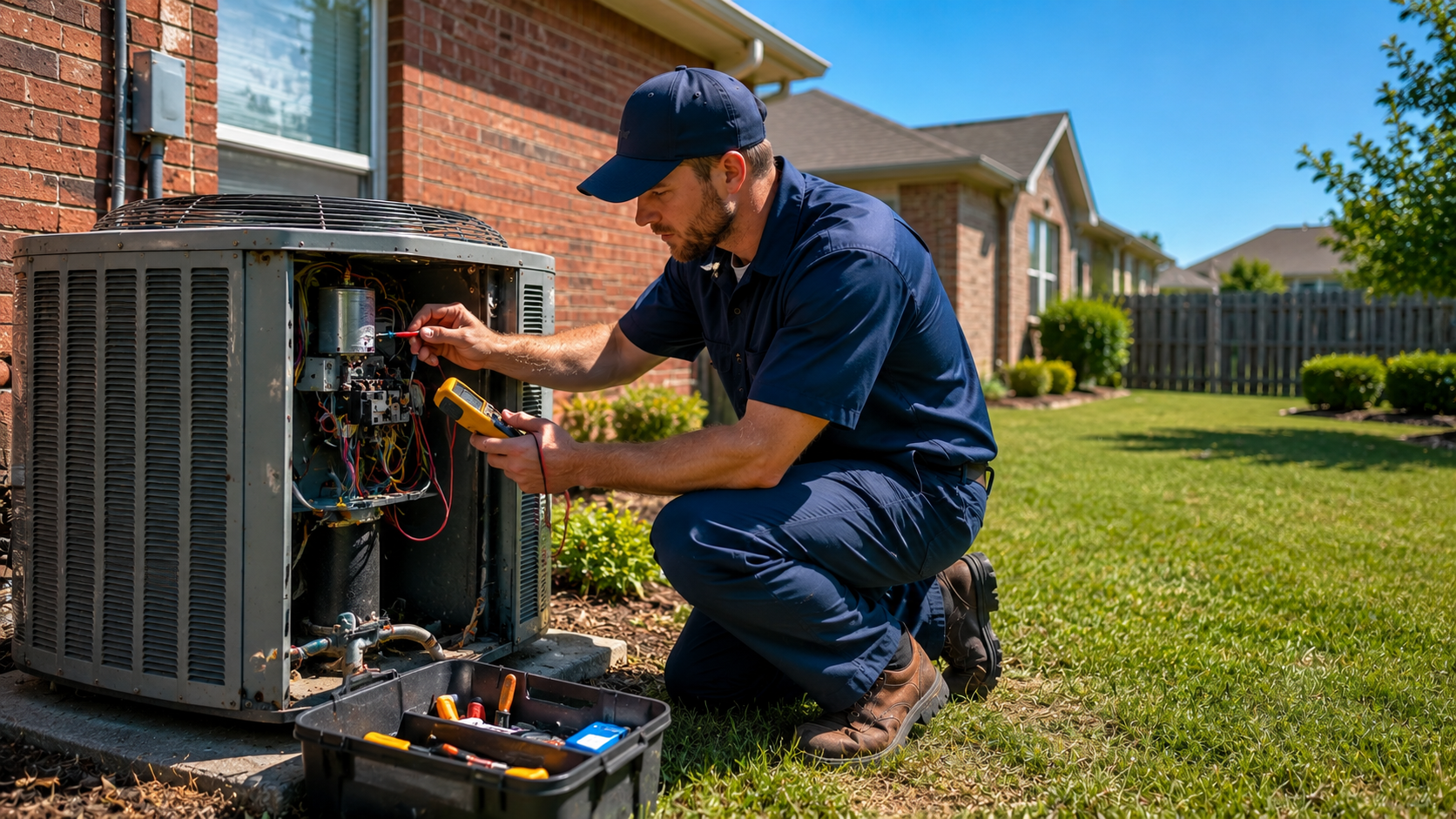
Last Tuesday, Fayetteville opened an emergency cooling center. The Department of Energy declared an energy emergency across Arkansas. Heat index values across Northwest Arkansas hit 110 degrees. Washington Regional Medical Center was seeing heat exhaustion cases in its emergency department.
And somewhere in Bentonville, Rogers, Springdale, or Tontitown, a homeowner was sitting in a house that was 84 degrees inside — staring at a phone, about to call an HVAC company — with absolutely no idea what the repair was going to cost.
That moment is exactly what this guide is for.
Getting a repair quote when your house is hot and your family is uncomfortable is the worst possible time to be negotiating without information. You cannot think clearly, you feel the urgency of every extra degree, and you are at maximum risk of either approving a repair that was not worth it or replacing a system that had years of life left. Both mistakes happen constantly in NWA every July and August, and both are completely avoidable with the right information in advance.
Here is what this guide delivers: real 2026 pricing for every common AC repair in Northwest Arkansas — not national averages, not ballpark figures, but honest ranges with the context that explains why your specific situation lands where it does. You will also get the exact questions to ask any HVAC company before approving a single dollar of work, the one refrigerant cost situation that caught thousands of NWA homeowners off guard in 2026, and the three repairs where a second opinion before approving is non-negotiable.
Why AC Repair Costs More in NWA in 2026 Than It Did Three Years Ago
Before we get into specific repair prices, you need to understand why the numbers shifted — because the 2026 AC repair cost environment in Northwest Arkansas is genuinely different from 2023, and the reasons matter for how you evaluate any quote you receive.
Three forces converged simultaneously to push repair costs up across the NWA market.
The first is the construction labor market. Northwest Arkansas is one of the fastest-growing metros in the South. The Bentonville-Fayetteville corridor has absorbed enormous population growth, retail development, and new construction activity driven by Walmart's supplier ecosystem and the broader tech and logistics presence in the region. That construction boom consumed skilled labor — including HVAC technicians — and pushed NWA labor rates significantly closer to national norms than they were five years ago. Historically, Arkansas labor costs ran 15 to 20 percent below the national average. In NWA today, that discount is much narrower, particularly for experienced technicians during peak summer demand.
The second force is refrigerant pricing. R-410A, the refrigerant in virtually every residential AC system installed between 2010 and 2022, is currently in an EPA-mandated phase-down under the American Innovation and Manufacturing Act. Production allocations for 2026 are materially smaller than prior years. The impact on service calls is direct and significant: R-410A that contractors purchased at roughly $8 to $11 per pound at wholesale in 2022 now costs $12 to $25 per pound — and homeowners pay $40 to $90 per pound on service invoices, reflecting the refrigerant cost plus labor, equipment, and overhead. Any repair that involves refrigerant — a leak recharge, a coil repair, a compressor replacement — carries a meaningfully higher refrigerant line item in 2026 than the same repair did three years ago.
The third force is peak demand surcharges. This summer has been brutal. The National Weather Service placed all of Northwest Arkansas under heat advisories and warnings repeatedly through July 2026. Emergency calls during heat waves carry after-hours and peak-demand surcharges that are legitimate — HVAC companies cannot keep pace with call volume during multi-day heat events without paying technicians overtime — but they add $75 to $150 or more to your base repair cost. The homeowner who calls at 7 PM on a 108-degree Tuesday pays more than the homeowner who called at 9 AM on a mild Friday in May. The repair is identical. The timing is not.
Understanding these three factors does not change your repair bill. But it does help you evaluate whether a quote is reasonable, inflated, or genuinely competitive for the NWA market right now.
What AC Repairs Actually Cost in Northwest Arkansas — The Complete 2026 Breakdown
In Arkansas, homeowners pay between $95 and $2,850 for AC repairs, with the average repair costing around $333 (as of early 2026, sourced from multiple cost databases including Angi, HomeGuide, and Thumbtack regional data). That wide range — from under a hundred dollars to nearly three thousand — reflects how dramatically different AC problems are from each other. A bad capacitor and a failed compressor are both "AC not cooling," but they are completely different financial conversations.
Here is the complete component-by-component breakdown for NWA in 2026.
Service Call / Diagnostic Fee: $29 to $150
Before any repair happens, a technician has to come out, diagnose the problem, and give you a quote. That visit costs money.
In NWA, diagnostic fees range widely. Franklin, one of NWA's most prominent HVAC companies, charges a $29 flat service call that covers the trip, general diagnosis, and an all-in price quote. Aire Serv of NWA waives their diagnostic fee entirely if you proceed with a repair or new installation.
Most independent HVAC companies in the Bentonville-Fayetteville market charge between $75 and $150 for a diagnostic visit, which is typically applied toward the repair cost if you authorize work.
At Breeze Heat and Air, our diagnostic call covers the failed component, full electrical testing of the outdoor unit, refrigerant pressure check, and a complete written assessment of system condition — not just the part that failed. You get the complete picture before you spend a dollar. Call 479.318.0107 to schedule.
Here is the insider reality that most guides skip: the service call fee is your cheapest protection against a bad repair recommendation. A technician who waives the fee entirely may be pricing that cost into the repair quote on the back end. A flat, transparent diagnostic fee — paid regardless of whether you proceed — actually creates the right incentive. The company gets paid to diagnose honestly, not to find the most expensive repair to cover a free visit.
Run Capacitor Replacement: $150 to $300
The most common AC repair in Northwest Arkansas, full stop. A run capacitor is a small cylindrical component in your outdoor unit that stores and releases electrical energy to start the compressor and fan motors. It degrades from heat exposure — and NWA summers are hard on capacitors. When it fails, the system often makes a clicking or humming sound and will not start, or the fan runs but the compressor does not.
The part itself costs $15 to $40. The rest of the bill is the diagnostic fee, labor (20 to 30 minutes for an experienced technician), and the company's overhead and profit margin. Total installed cost: $150 to $300 in the NWA market in 2026.
This is a repair that is almost always worth doing, regardless of system age. A 15-year-old system with a bad capacitor and no other symptoms is worth a $200 capacitor fix — you might get three to five more years from it. The one exception: if a technician replaces the capacitor and the system still does not cool, the diagnostic continues and the root cause is something deeper.
Contactor Replacement: $150 to $330
A contactor is the relay switch in your outdoor unit that receives the signal from your thermostat and connects line voltage to the compressor and fan. Contact points pit and burn from repeated electrical arcing over years of use. A worn contactor can cause the system to fail to start, cycle erratically, or in some cases, fail to shut off.
Franklin's published pricing lists contactor replacements starting from $329.96 in the NWA market. Independent contractors in the region typically quote $150 to $280 for the same repair. The part is $20 to $60. Labor runs 20 to 45 minutes. The variation in market pricing for this common repair is actually useful information — it tells you there is meaningful pricing spread in the NWA HVAC market, and getting two quotes on any repair over $200 is always reasonable.
Like the capacitor, a contactor replacement is worth doing on systems of almost any age if the rest of the system is in good condition.
Condensate Drain Line Clearing: $75 to $250
This is the most preventable repair on this list, and it is one of the most common service calls every NWA summer. The condensate drain line carries moisture removed from your home's air out to a drain or outside. In NWA's hot, humid summers — where AC systems pull enormous amounts of moisture from the air — algae builds up in the drain line and can cause a clog. When it clogs, the condensate pan fills up, a safety float switch triggers, and the system shuts down to prevent water damage.
Symptoms: the system suddenly stops running, no unusual sounds, the thermostat is set correctly. Many homeowners assume the worst. Often, the fix is a $75 to $150 drain line flush. You can actually prevent most condensate clogs with a $2 bottle of white vinegar poured into the drain line access point monthly during cooling season. We tell every customer this at every service visit. It saves money. It also means we lose the occasional service call — but honest advice is the point.
Thermostat Replacement: $100 to $500
When your thermostat fails, the system may not respond to temperature calls, cycle at the wrong time, or display inaccurate readings. Thermostat replacement costs depend almost entirely on which thermostat you choose. A basic replacement thermostat runs $30 to $80 for the part and $75 to $150 for installation labor — total $100 to $230. A smart thermostat (Ecobee, Nest, Honeywell Home) adds $150 to $250 for the device itself, bringing the total to $300 to $500 installed.
Here is the thing almost no HVAC company will tell you about smart thermostat installation: SWEPCO's rebate program pays $75 on qualifying ENERGY STAR smart thermostats replacing manual or programmable thermostats. If you are replacing a thermostat anyway and you choose an ENERGY STAR qualifying smart thermostat, you can recapture $75 through the SWEPCO rebate program. It does not cover the full cost, but it is real money. Our HVAC Rebates guide for NWA covers the complete SWEPCO rebate process.
Condenser Fan Motor Replacement: $300 to $600
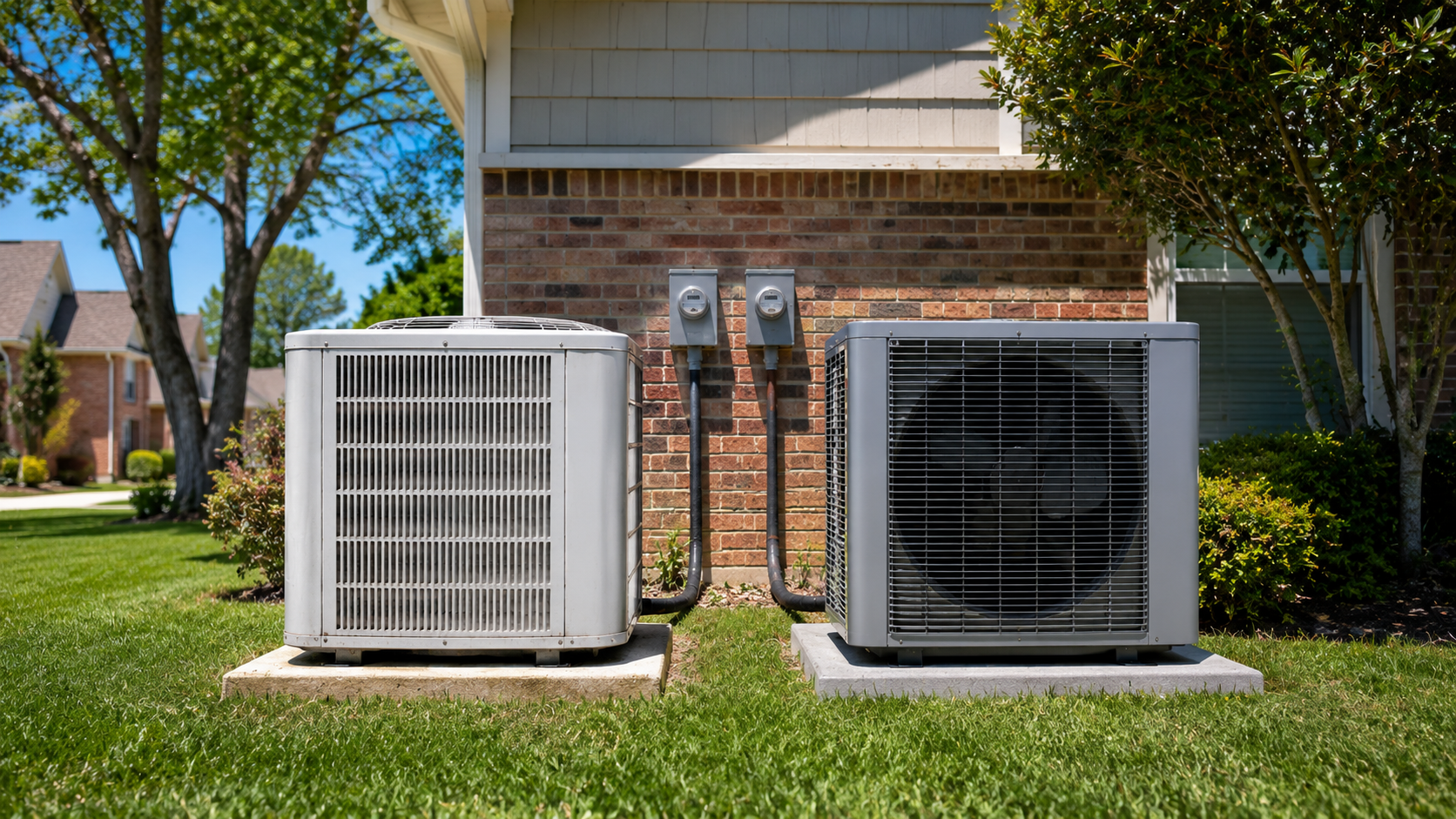
The condenser fan motor sits in your outdoor unit and pulls air through the condenser coil to remove heat from the refrigerant. When bearings wear out — often signaled by a grinding or squealing sound before full failure — the motor seizes, overheats the compressor, and the system shuts down on safety. In NWA's summer heat, a failed condenser fan motor during a heat wave can lead to compressor damage if the unit runs briefly on a shorted motor before the safety trips.
Labor for this repair runs 45 to 90 minutes. Parts run $100 to $250 depending on the specific motor required for your system. Total installed: $300 to $600 in the NWA market. On systems under 10 years old, this repair is straightforward. On older systems, assess the overall unit condition alongside the motor before authorizing the repair.
Evaporator Coil Cleaning: $100 to $400
The evaporator coil is inside your air handler and is responsible for absorbing heat from the air moving through your home. Over time — especially in homes with inadequate filter maintenance — the coil accumulates a layer of dust, debris, and biological growth that insulates the coil and dramatically reduces cooling efficiency. Symptoms include reduced cooling capacity, longer run times, and ice formation on the coil or refrigerant lines.
A professional coil cleaning runs $100 to $400 depending on coil access, contamination level, and whether a full chemical cleaning is required versus a standard rinse. This is one of the repairs most directly prevented by changing your air filter regularly — a point we will return to in the prevention section.
Refrigerant Recharge (Leak Repair and Recharge): $400 to $1,500+
This is the repair where 2026 pricing diverges most significantly from what NWA homeowners expected based on prior experience — and the number that catches the most people off guard.
Here is the critical fact that every NWA homeowner needs to understand: AC systems do not consume refrigerant. They are sealed systems. If your refrigerant is low, you have a leak. Adding refrigerant without finding and fixing the leak means you will be paying for another recharge in 6 to 18 months — at prices that will be higher than today.
The 2026 cost breakdown on a refrigerant service call:
Leak detection: $100 to $250, depending on method (electronic leak detector, UV dye test, nitrogen pressure test). Leak repair: $150 to $400 depending on leak location. An accessible fitting or valve core is a 20-minute fix. A pinhole in the evaporator coil is a much larger job. Refrigerant recharge: R-410A currently runs $40 to $90 per pound on residential service invoices in 2026, per Angi, HomeGuide, and ACDirect market data. A 3-ton residential system holds 6 to 12 pounds of refrigerant total. A full recharge — which happens after coil replacement or major leak repair — runs $250 to $800 in refrigerant cost alone.
Total refrigerant service call range: $400 to $1,500, depending on how much refrigerant was lost, where the leak is, and whether the leak requires a component replacement to permanently fix.
The R-410A price trajectory matters here. R-410A prices have climbed 40 to 60 percent since 2023 as the AIM Act phase-down compresses supply. The R-22 phase-out precedent is instructive: R-22 went from roughly $20 per pound in 2015 to $150 to $250 per pound by 2024 as supplies ran out. R-410A is on the same trajectory, at a different pace. A system that needs a refrigerant-related repair today will need the same repair at a higher refrigerant cost next time. This is the calculation that tips older systems with refrigerant issues toward replacement.
If a contractor quotes you a refrigerant "top-off" without leak detection, that is a red flag. Demand leak detection and repair as part of any refrigerant service. At Breeze Heat and Air, we never top off without finding and fixing the source. Get the details on our AC Repair service page.
TXV (Thermostatic Expansion Valve) Replacement: $400 to $700
The TXV is the metering device that controls refrigerant flow into the evaporator coil. It is a precise component that fails from contamination, refrigerant system debris, or loss of sensing bulb charge. Symptoms include uneven cooling, ice formation on the coil, or a system that cools briefly then loses capacity. Labor runs 1.5 to 3 hours. Total installed: $400 to $700. Worth repairing on systems under 10 years old in otherwise good condition.
Control Board Replacement: $400 to $700
The control board is the circuit board that manages the system's electrical functions — receiving signals from the thermostat, sequencing compressor and fan motor starts, monitoring safety switches. Board failures produce erratic behavior: intermittent operation, error codes, components that run when they should not. Parts run $150 to $300. Labor runs 1 to 2 hours. Total: $400 to $700. Verify warranty coverage on newer systems before authorizing board replacement — control boards are often covered under the original equipment warranty.
Compressor Replacement: $1,200 to $2,500
The compressor is the heart of your AC system — the component that pressurizes refrigerant and drives the entire cooling cycle. When it fails, the system does not cool. Period. Compressor failure is the repair that most often triggers the repair-versus-replace conversation.
The compressor itself costs $600 to $1,200 depending on tonnage and refrigerant type. Labor for compressor replacement runs 4 to 6 hours — it is a major job that involves recovering the existing refrigerant charge, removing and replacing the compressor, evacuating and leak-testing the system, and recharging. Total installed: $1,200 to $2,500, with the average for a 3-ton residential system running approximately $1,550 (per This Old House 2026 national data).
Here is the honest calculus: on a system under warranty, compressor replacement often makes sense — the part may be covered, leaving only labor at $600 to $900. On a system 10 years or older with no warranty, a $1,800 compressor repair should be evaluated against the 50% Rule before authorization. On a 12-year-old system where replacement cost runs $6,000 to $8,000, a $1,800 compressor is exactly at the 30% threshold where replacement starts making financial sense. Our AC Repair vs. Replace guide walks through that decision framework in detail.
Complete Repair Cost Reference Table
| Repair Type | NWA 2026 Cost Range | Typical Labor Time |
|---|---|---|
| Service call / diagnostic | $29 – $150 | 30 – 60 min |
| Capacitor replacement | $150 – $300 | 20 – 30 min |
| Contactor replacement | $150 – $330 | 20 – 45 min |
| Condensate drain clearing | $75 – $250 | 30 – 60 min |
| Thermostat replacement | $100 – $500 | 30 – 90 min |
| Condenser fan motor | $300 – $600 | 45 – 90 min |
| Evaporator coil cleaning | $100 – $400 | 60 – 120 min |
| Refrigerant recharge + leak repair | $400 – $1,500 | 90 – 240 min |
| TXV replacement | $400 – $700 | 90 – 180 min |
| Control board replacement | $400 – $700 | 60 – 120 min |
| Compressor replacement | $1,200 – $2,500 | 240 – 360 min |
The Emergency Repair Premium — What After-Hours Calls Cost in NWA
Here is a number most HVAC guides conveniently omit.
Emergency, after-hours, and weekend AC calls in Northwest Arkansas carry surcharges that add $75 to $150 or more to the base repair cost. During extreme heat events — and this summer has had several — some companies apply peak demand pricing on top of after-hours rates.
The practical math: a $250 capacitor replacement at 9 AM on a weekday becomes a $375 to $400 repair at 7 PM on a Sunday during a heat advisory. The part and the labor are identical. The timing costs $125 to $150 extra.
This is not price gouging. During heat emergencies, HVAC companies are running every available technician at maximum capacity, paying overtime, and managing a call queue measured in hours. The surcharge compensates for that reality.
What this means for NWA homeowners: get your system professionally maintained in March or April — before peak season demand makes scheduling difficult and before the system is working its hardest.
A $175 to $250 spring tune-up that catches a failing capacitor in April costs you dramatically less than the same capacitor replaced on an emergency basis in August. Our
Total Breeze Club membership includes priority service scheduling for members, which means if you do have an emergency in July, you move to the front of the line.
The Four Questions to Ask Before Authorizing Any AC Repair
This is where homeowners lose money — not on the repair itself, but in the approval decision. These four questions, asked before authorizing work, separate informed decisions from reactive ones.
Question 1: What is the exact component that failed, and what caused it to fail?
A technician should be able to tell you the specific component, the failure mode, and the likely cause. "Your capacitor failed" is useful. "Your capacitor failed because it was original equipment on a 14-year-old system and heat exposure degrades them over time" is complete. "Something is wrong with your AC" is not acceptable. If a technician cannot explain the failure clearly in plain English, the diagnosis is not done.
Question 2: What is the all-in price, including labor, parts, refrigerant if applicable, and any additional charges?
Flat-rate quotes are straightforward. Time-and-materials quotes require you to ask explicitly about refrigerant price per pound (if refrigerant work is involved) and estimated labor hours. A quote that gives you part cost but not labor cost is incomplete. Franklin's approach — all-in price before any work begins — is the right model. Insist on knowing the complete price before authorizing.
Question 3: What is the current condition of the rest of the system?
This is the question most homeowners forget and most contractors do not volunteer. You paid for a diagnostic. That diagnostic should include more than the failed component. A complete assessment covers capacitor and contactor condition (both), refrigerant pressure, coil visual inspection, and outdoor unit condition. If the rest of your system is also showing wear — and the technician knows it — you deserve to know before you approve a $400 repair that buys you one season before the next failure.
Question 4: Does my system or this specific component have any remaining warranty coverage?
Compressors on Rheem systems installed through a Pro Partner contractor carry a 10-year parts warranty when registered within 90 days of installation. A compressor failure in year 6 of a warranted system is a labor-cost conversation, not a full compressor replacement bill. Always confirm warranty status before authorizing major component repairs. If you do not know your system's registration status, call us at 479.318.0107 — we can look it up for any Rheem system we installed.
Why Refrigerant Repair Quotes in NWA Are Higher Than You Expect in 2026
Let us spend a moment on the refrigerant situation specifically, because it is the area where the largest unexpected costs are landing for NWA homeowners this summer.
R-410A prices climbed 40 to 60 percent between 2023 and 2026. Contractors who purchased R-410A at $8 to $11 per pound at wholesale three years ago are now paying $12 to $25 per pound — and service invoice prices reflect that increase. Homeowners who had a refrigerant service call in 2022 or 2023 and are using that experience to evaluate a 2026 quote are working from outdated reference points.
The R-22 precedent is worth understanding. R-22 was the standard residential refrigerant before 2010. Its phase-out concluded in 2020. In the years leading up to complete elimination, R-22 prices went from approximately $20 per pound to $150 to $250 per pound as supply contracted. Homeowners with R-22 systems faced refrigerant service bills that made repair economically irrational — the refrigerant cost alone exceeded the repair value.
R-410A is on the same trajectory, with the production phase-down continuing through 2036. Current installed prices of $40 to $90 per pound will not be the ceiling. The practical implication for NWA homeowners: any system currently running on R-410A (manufactured 2010 to 2022) that develops a refrigerant issue in the next few years faces escalating refrigerant costs each time, unless the root leak is permanently fixed.
One important clarification that confusion around refrigerants creates: if a contractor suggests you convert your existing R-410A system to use R-454B (the newer refrigerant used in new equipment), that is not possible. The new A2L refrigerants cannot be used in equipment designed for R-410A. Systems are designed for specific refrigerants. Conversion is not a service option — replacement is.
The NWA-Specific Factors That Affect Your Repair Cost
Generic AC repair guides miss the local context that actually determines where your specific repair lands in the pricing range.
NWA humidity accelerates certain failures.
The Bentonville-Fayetteville corridor sits in ASHRAE Climate Zone 4A — mixed-humid. Our summers are not just hot; they are genuinely humid. That humidity combination means condensate drain systems work harder, coils accumulate biological growth faster than in dry climates, and outdoor units in shaded or poorly-drained locations face accelerated corrosion. An evaporator coil cleaning in NWA needs to happen more often than the manufacturer's service interval assumes — especially in homes with dogs, high occupancy, or older ductwork.
NWA attics are brutal on systems.
Many Bentonville-area homes from the early 2000s construction era have air handlers located in attic spaces. In July, an NWA attic can reach 140 to 160 degrees Fahrenheit. Control boards, capacitors, and electrical components in air handler units run in those environments year after year. Failure rates for attic-mounted air handlers are higher than for basement or closet-mounted units — and repair access in a 140-degree attic is slower and harder, which affects labor time. Our Indoor Air Quality service page covers some of the ways attic-mounted systems also affect whole-home comfort beyond just repair costs.
NWA labor rates are a step above the rest of Arkansas.
The construction boom effect on skilled trades is real. Expect to pay toward the upper half of any national average range for HVAC labor in Bentonville, Rogers, and Fayetteville — not at the lower bound.
How to Cut Your AC Repair Costs Without Cutting Corners
Maintenance is the most powerful lever you have over repair costs. We say this not to sell maintenance plans — though we do have one — but because the data is genuinely compelling.
Change your air filter monthly during cooling season.
A clogged air filter is the single most common cause of avoidable AC service calls. Restricted airflow forces the evaporator coil to drop below freezing, ice forms, cooling stops, and a homeowner calls for emergency service. The diagnostic reveals a clogged filter. The fix is a $5 filter. The service call cost is $75 to $150. That scenario plays out dozens of times in NWA every summer.
Schedule a spring tune-up before June
A professional AC tune-up — checking refrigerant pressure, testing electrical components, cleaning the condenser coil, verifying drain line flow, and measuring system performance — runs $75 to $250 in the NWA market. Franklin charges $69 per system for tune-ups. SWEPCO's CoolSaver program pays a rebate of $175 to $250 for tune-ups performed by approved contractors. A tune-up that catches a failing capacitor in March saves you the after-hours emergency call rate in July.
Keep the outdoor unit clear.
Two feet of clearance around your outdoor condenser unit is the standard recommendation. Shrubs, debris, and overgrown vegetation restrict airflow through the condenser coil, force the system to work harder, and accelerate compressor wear. This takes five minutes with a pair of pruning shears.
Join a maintenance membership program
Our Total Breeze Club membership includes priority emergency scheduling, seasonal tune-ups, and member discounts on repairs. For an NWA homeowner with a mid-age system, the membership cost is typically recovered in a single repair discount and the value of avoided emergency call surcharges alone.
When Repair Becomes the Wrong Answer — Spotting It Fast
This guide is about repair costs, but honest pricing information has to include the moment when repair stops making financial sense.
The signals are specific. Three or more service calls in 24 months. Refrigerant-related repairs on a pre-2010 system. A compressor quote that exceeds 40 to 50 percent of replacement cost on a system over 12 years old. A system that struggles to cool your home even after a repair is complete. Any of these indicators mean the next conversation should be about replacement, not the next repair.
We covered the full decision framework — the 50% Rule, the $5,000 Rule, the five warning signs — in our AC Repair vs. Replace guide. If you read that guide and your system checks two or more boxes, call us before approving a repair. We will be honest with you about which path makes financial sense.
Frequently Asked Questions About AC Repair Costs in NWA
What is the average AC repair cost in Northwest Arkansas in 2026?
In Arkansas, the average AC repair runs approximately $333, with a range of $95 to $2,850 depending on the component that failed. In NWA specifically, expect costs at the upper half of that range due to the regional labor market. Common repairs like capacitor and contactor replacement run $150 to $330. Major repairs like compressor replacement run $1,200 to $2,500.
Why is my refrigerant recharge quote so high in 2026?
R-410A refrigerant prices have risen 40 to 60 percent since 2023 due to the EPA's AIM Act phase-down reducing production allocations. Homeowners are now paying $40 to $90 per pound installed versus $25 to $40 per pound three years ago. A full system recharge after a coil repair on a 3-ton system involves 6 to 12 pounds of refrigerant — the refrigerant cost alone can reach $240 to $720 before labor.
Do HVAC companies in NWA charge to come out and diagnose the problem?
Yes, most do. Diagnostic fees in the NWA market range from $29 (Franklin's flat service call) to $75 to $150 for most independent companies, often waived or applied toward the repair if you authorize work. Aire Serv waives the fee entirely when you proceed with a repair. Breeze Heat and Air's diagnostic includes a full system condition assessment, not just the failed component.
How long does a typical AC repair take in NWA?
Minor electrical repairs like capacitor or contactor replacement take 20 to 45 minutes on site. Fan motor and valve replacements run 60 to 90 minutes. Refrigerant repairs take 90 to 240 minutes depending on leak location and recharge volume. Compressor replacement is a 4-to-6-hour job. Your technician should give you a realistic time estimate before work begins.
Is it worth repairing an older AC unit in NWA?
It depends on age, repair history, and the specific component. A minor electrical repair on a 12-year-old unit with no prior repair history may be worth doing. A compressor replacement on a 14-year-old unit with two prior repairs in the last 18 months almost certainly is not. Apply the 50% Rule — if the repair exceeds 50% of replacement cost on a system past its midpoint lifespan, replacement is usually the better investment.
Do AC warranties cover repairs in NWA?
Manufacturer warranties cover parts; you pay labor. Rheem systems installed by a Pro Partner contractor like Breeze Heat and Air carry a 10-year parts warranty when registered within 90 days of installation. Compressors are typically covered for 5 to 10 years depending on the system. Always check warranty status before authorizing major repairs — a compressor replacement on a warranted system may cost only $500 to $900 in labor versus $1,200 to $2,500 all-in.
Can I do any AC repairs myself to save money?
Condensate drain line maintenance with white vinegar is safe and effective as a preventive measure. Air filter replacement is the single highest-ROI DIY task. Beyond that: no. Refrigerant handling requires EPA Section 608 certification and is illegal without it. Electrical component work in the outdoor unit involves stored capacitor charge and line voltage — genuine safety hazards. Compressor and coil work requires specialized tools. DIY AC repair that goes wrong turns a $200 repair into a $2,000 one.
What should I do if my AC stops working during a NWA heat advisory?
Call a licensed HVAC company immediately. Before they arrive, check your thermostat batteries, confirm the circuit breaker has not tripped, and replace your air filter if it has not been changed recently — these three steps resolve a meaningful percentage of "AC not working" calls without any repair at all. If the system is iced over (you can see frost or ice on the refrigerant lines or indoor unit), turn the system to fan-only mode for 2 to 3 hours to let it thaw before the technician arrives — this speeds up the diagnostic process.
Does Breeze Heat and Air offer emergency AC repair in NWA?
Yes. We provide emergency HVAC services across all of Northwest Arkansas — Bentonville, Fayetteville, Rogers, Springdale, Tontitown, Lowell, Farmington, Cave Springs, Siloam Springs, Pea Ridge, Gravette, Prairie Grove, Johnson, and Elm Springs. Call us at 479.318.0107 for current scheduling availability.
The Bottom Line on AC Repair Costs in Northwest Arkansas
That homeowner sitting in an 84-degree house during a NWA heat advisory deserves two things: a fast response and honest pricing information before they authorize anything.
Most AC repairs in Northwest Arkansas land between $150 and $600. Capacitors, contactors, fan motors, drain line clears — these are the everyday repairs, and they are worth doing on systems of virtually any age when the rest of the unit is sound. Refrigerant repairs and compressor replacements are the expensive tier, and they require the additional evaluation question of whether repair or replacement makes better financial sense.
The four questions before authorizing — what failed, what is the all-in price, what is the rest of the system's condition, and is there warranty coverage — protect you every time regardless of which company you call.
And here is the perspective shift that saves NWA homeowners the most money long-term: the $200 tune-up in April is the AC repair bill you never see in August. Our
Total Breeze Club membership exists because that math compounds over years, not just seasons.
If your AC stopped cooling and you are in Northwest Arkansas right now, call Breeze Heat and Air at 479.318.0107. We will give you an honest diagnostic, a complete system condition assessment, and a straight answer on repair versus replace — without pressure, without upsell, without surprises on the invoice.
What is the most unexpected AC repair cost you have encountered in NWA? Share it in the comments — knowing what surprises other homeowners helps everyone in the region make better decisions.
Breeze Heat and Air — LIC# 15474066 — Rheem Pro Partner — Mitsubishi Diamond Dealer — Serving all of Northwest Arkansas
HVAC Resources for Northwest Arkansas Homeowners
Expert guidance on repairs, replacements, rebates, and maintenance — everything you need to make confident decisions about your home's heating and cooling.