September 4, 2026
Why Is My Electric Bill So High in Summer? (The NWA HVAC Answer)
The Bill That Made Him Donate Plasma Twice a Week
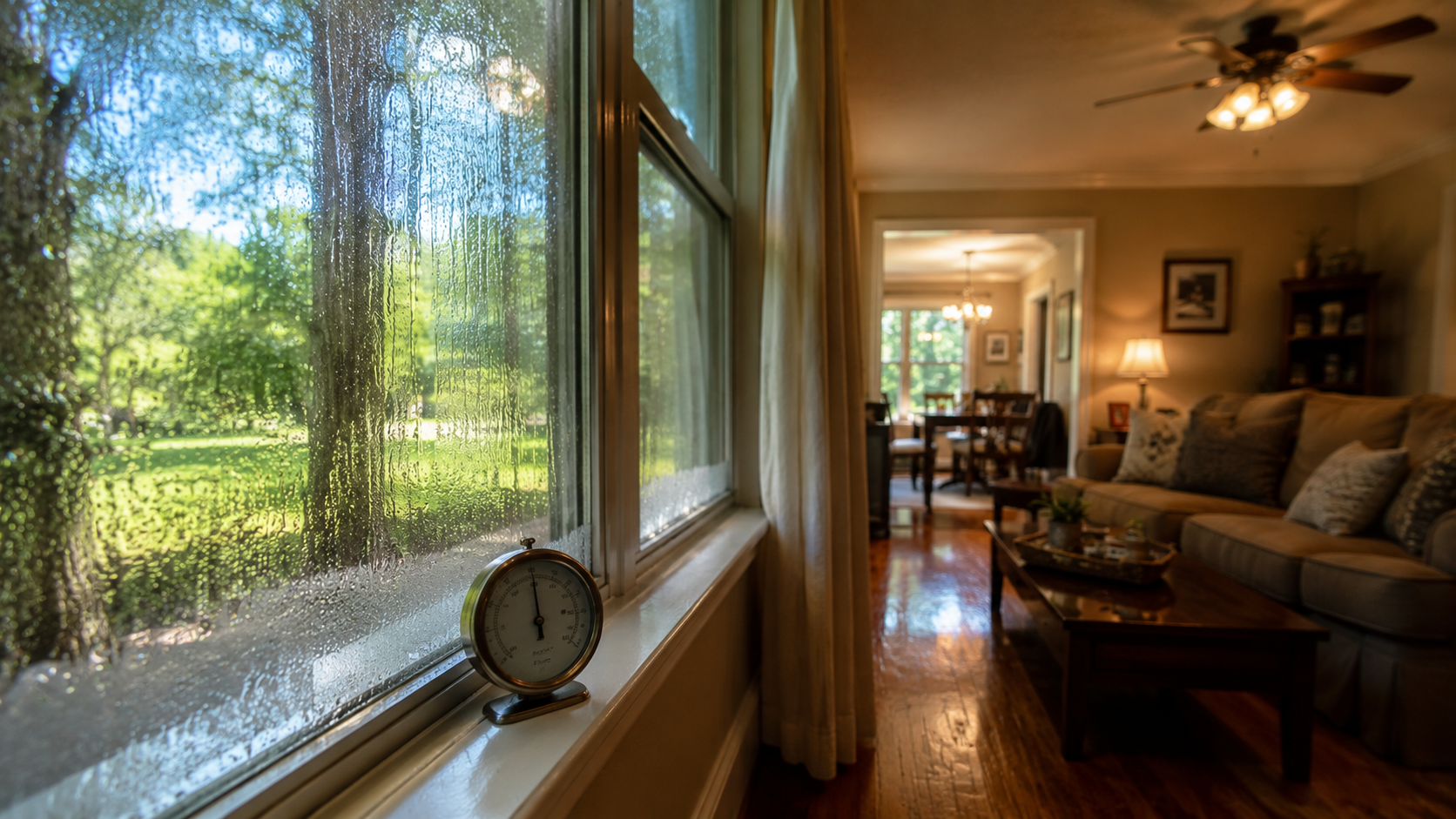
Matthew Kolb lives in Northwest Arkansas. He has a full-time job and serves in the Army Reserve. He and his wife have two kids under two years old. And this summer, his electric bill hit $250 a month — high enough that he started donating plasma twice a week to help cover it.
That story ran on NPR in May 2026. It caught our attention not because it was shocking, but because we recognized it immediately. We have been in NWA homes all summer. We have seen the bills. We have heard the same conversation in Bentonville subdivisions, Fayetteville craftsman bungalows, Rogers split-levels, and Springdale ranch homes built in the early 2000s. The number changes — $220, $285, $340 — but the confusion and frustration are identical.
Here is the part that matters: in most cases, the bill is not just the weather. It is not just rising utility rates. It is not just the fact that Arkansas summers are brutal. Those factors are real, but they are the background conditions. The foreground — the part you can actually do something about — is almost always your HVAC system. Something about how it is running, how old it is, whether it has been maintained, or how the air it conditions is being delivered through your home.
That is the NWA HVAC answer this guide delivers.
You will discover the seven specific HVAC-related reasons NWA homeowners are paying $50, $100, and sometimes $150 more per month than they should be. You will get real numbers grounded in SWEPCO and Carroll Electric rate data, not national averages. You will understand exactly which of these seven causes applies to your situation. And you will know which ones you can fix yourself today versus which ones require a professional — and what that professional visit should cost and deliver.
Americans will spend an average of $792 on electricity between June and September this summer — a 10.5% increase from the same period in 2025. In NWA, SWEPCO just announced emergency bill assistance programs this week, pausing required deposits for existing residential customers through October because the summer heat has driven bills high enough to push households into hardship. The problem is real. The solutions are specific. Let us get into them.
Why NWA Electric Bills Are Higher in Summer Than Almost Anywhere Else in the State
Before we get into the seven HVAC causes, you need to understand the baseline conditions that make summer billing in NWA uniquely painful — because these factors interact with every HVAC problem and amplify their cost.
<cite index="78-1">Arkansas electricity bills are feeling the strain in 2026, with high fuel prices keeping the cost of grid power stubbornly elevated across the state.</cite> Arkansas's average residential rate sits at approximately 14.36 cents per kilowatt-hour as of August 2026 per EIA data. SWEPCO customers in NWA pay approximately 15.43 cents per kilowatt-hour — slightly above the state average. That rate has climbed more than 39% over the past five years nationally, and NWA's rate trajectory mirrors that trend.
The average Arkansas electric bill runs approximately $129 per month for typical household consumption of around 1,049 kilowatt-hours. In summer — when air conditioning drives consumption to 1,400, 1,600, even 2,000 kilowatt-hours per month — that bill climbs to $200, $250, and beyond. A household running an aging, inefficient AC system through an NWA July does not see a $129 bill. They see a $300 bill, sometimes more.
The NWA climate compounds everything. We sit in ASHRAE Climate Zone 4A — mixed-humid. Our cooling season runs from late April through October — six full months. Outdoor temperatures regularly exceed 95 degrees through July and August, with heat index values pushing past 110 degrees during the heat waves that hit NWA multiple times each summer. Air conditioning demand through that window is relentless, not seasonal. Your system is not cooling for two or three months. It is cooling for six.
<cite index="57-1">According to the U.S. Energy Information Administration, home heating and cooling costs can make up more than 52% of an average customer's electric bill.</cite> In NWA summer, that percentage climbs higher. When your HVAC system is running inefficiently, it is not wasting 10% or 15% of a small line item. It is wasting a significant share of your largest monthly expense.
Now here are the seven specific reasons it is wasting it.
Reason 1 — Your Air Filter Is Clogged and Choking the System
This is the most common cause of a suddenly high summer electric bill in NWA — and it costs nothing to fix.
<cite index="93-1">Dirty filters force your system to work harder, increasing energy consumption by 5% to 15%. A clogged filter restricts airflow and makes the system run longer to reach desired temperatures. According to the U.S. Department of Energy, replacing a clogged air filter with a clean one can lower your air conditioner's energy consumption by 5% to 15%, making filter changes one of the most cost-effective maintenance steps a homeowner can take.</cite>
Here is what actually happens inside your system when the filter clogs. Your air handler pulls return air through the filter and across the evaporator coil.
When the filter is loaded with dust, the airflow drops. The evaporator coil, starved of air moving across it, drops in temperature below the freezing point. Ice forms on the coil. Ice further restricts airflow. The system keeps running — longer and longer cycles — trying to reach the thermostat setpoint it can never hit. Meanwhile, your electricity consumption climbs 10% to 15% for the same cooling output you were getting before the filter clogged.
In NWA's summer environment, filters clog faster than manufacturers' change intervals suggest. Homes with pets, high occupancy, or older ductwork that pulls in attic particulate can dirty a 1-inch filter in three to four weeks rather than the labeled 30 to 90 days. During June, July, and August in Bentonville and Fayetteville, we recommend checking your filter monthly and replacing it the moment it looks grey and loaded — not on a calendar schedule.
The fix costs $5 to $20 for the filter. The bill reduction is immediate on the next billing cycle. If you have not changed your filter since Memorial Day and your July bill surprised you, this is step one — do it before you call anyone.
Reason 2 — Your Ductwork Is Leaking Conditioned Air Into the Attic
This is the hidden bill-driver that most NWA homeowners never suspect — because the ducts are out of sight and the efficiency loss happens silently, month after month.
<cite index="102-1">According to the U.S. Department of Energy, 20 to 30 percent of the air that moves through duct systems is lost due to leaks, holes, and poor connections. That is money, comfort, and performance slipping through the cracks.</cite>
Think through what that means in practice for a typical NWA home.
Your system generates conditioned air and pushes it through flex ductwork runs that travel through an unconditioned attic space. In July, that attic is sitting at 140 to 160 degrees Fahrenheit. When your ducts have gaps at connections, tears in the flex duct jacket, or separated sections — all common in NWA homes from the 2000s construction era — a significant portion of the cool air you paid to produce escapes into that 150-degree attic before it ever reaches your living room.
Your system compensates by running longer. And longer. And longer. The thermostat reads 76 degrees in the hallway near the unit but 82 degrees in the back bedroom — because that bedroom's supply duct has a disconnected section dumping cool air into the attic. You run the system harder trying to cool the back of the house. The bill climbs. And you never connect the cause to the ducts because you cannot see them.
<cite index="101-1">For homes with ducts in attics, crawl spaces, or unconditioned basements, combined losses from leakage and heat transfer can reach 30 to 40 percent. Energy Star puts the leakage figure at 20 to 30 percent for a typical home.</cite>
The financial math is blunt. If your July HVAC electricity spend is $200 and 25% of conditioned air is escaping through duct leaks, you are paying $50 per month for cooling that never reaches a single room in your house. Over a six-month NWA cooling season, that is $300 in wasted electricity annually — before we account for the added wear on your compressor from the extended run times.
SWEPCO's rebate program includes incentives for duct sealing performed by approved contractors — a fact almost no NWA homeowner knows. Our Ductwork service page covers what a professional duct assessment includes and what duct sealing can realistically recover in monthly bill savings.
Reason 3 — Your System Is Low on Refrigerant
A refrigerant leak does not announce itself. The system keeps running. The house stays almost cool enough. And your bill climbs 15% to 25% while you wonder what changed.
<cite index="92-1">Air conditioners and heat pumps use refrigerant to transfer heat. They do not normally use up refrigerant like a car uses gasoline. If the refrigerant level is low, there may be a leak or another system problem. The equipment may continue running but struggle to cool the home, leading to longer cycles and greater electricity consumption.</cite>
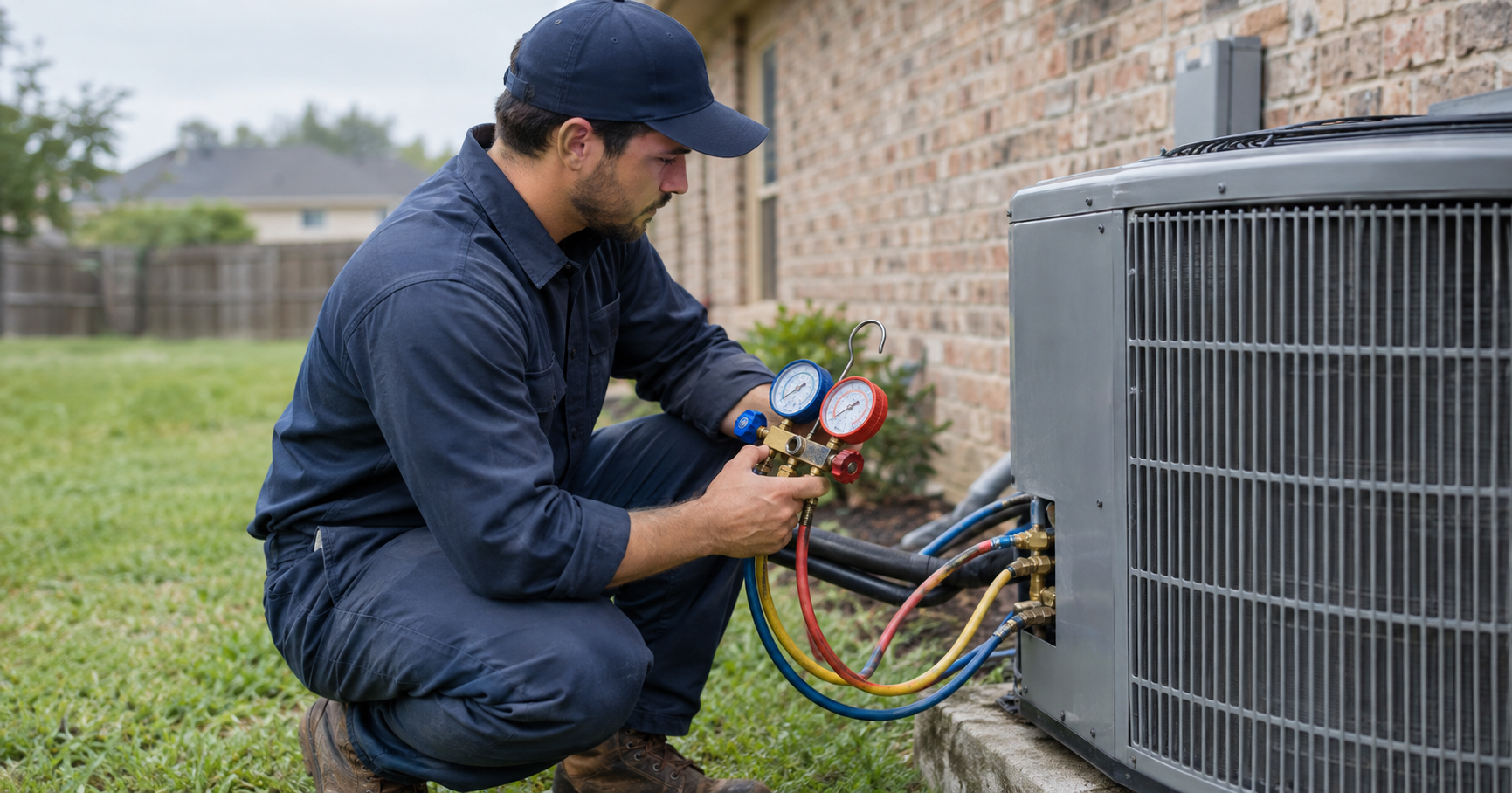
Here is the physics of what happens. Refrigerant is the working fluid that absorbs heat from your home's air at the evaporator coil and dumps it outside at the condenser. When refrigerant is low due to a leak, the system cannot absorb heat as efficiently. The compressor works harder and runs longer trying to achieve the same heat transfer. Your home never quite reaches the thermostat setpoint on a hot afternoon. And your electricity consumption for that extended, inefficient compressor runtime shows up directly on your bill.
The diagnostic sign most homeowners miss: your system runs longer cycles than it used to, the house feels slightly less comfortable than last summer, but nothing is obviously broken. No unusual sounds. No system shutdowns. Just a bill that is higher than expected and a house that feels like it is working hard without quite delivering.
In 2026 specifically, the refrigerant situation carries an extra layer of cost. R-410A — the refrigerant in virtually all NWA residential systems installed between 2010 and 2022 — is in an EPA-mandated phase-down. Its cost has increased 40 to 60 percent since 2023. A refrigerant service call that cost $300 in 2022 now runs $400 to $800 depending on how much refrigerant was lost and where the leak is. And crucially: adding refrigerant without finding and permanently fixing the leak means you will be paying that same bill again in 12 to 18 months.
If you suspect refrigerant loss, call us at 479.318.0107. We do not top off refrigerant without locating and fixing the source leak — which is both the ethical approach and the only one that actually solves your bill problem. Our AC Repair service page explains what a complete refrigerant diagnostic involves.
Reason 4 — Your Condenser Coil Is Dirty and Cannot Release Heat
Your outdoor unit has a condenser coil that is supposed to dump the heat it pulled from your home's air into the outside atmosphere. When that coil is coated in dirt, cottonwood, grass clippings, and debris — which is exactly what happens to NWA outdoor units sitting in summer landscaping — it cannot release heat effectively.
<cite index="91-1">Airflow problems can reduce your system's efficiency by up to 15 percent, according to ENERGY STAR. Without periodic service, smaller issues such as refrigerant leaks, dirty outdoor compressor coils, worn parts, or tears and gaps in ductwork can go unnoticed, allowing cooled air to escape before it reaches the rooms that need it.</cite>
A dirty condenser coil creates a specific problem called high head pressure. The refrigerant cannot dump its heat load efficiently, so pressure builds in the high-pressure side of the system. The compressor works against that elevated pressure, consuming more electricity. The system's efficiency drops measurably — a condenser coil with moderate fouling can reduce system SEER efficiency by 10 to 30 percent depending on severity.
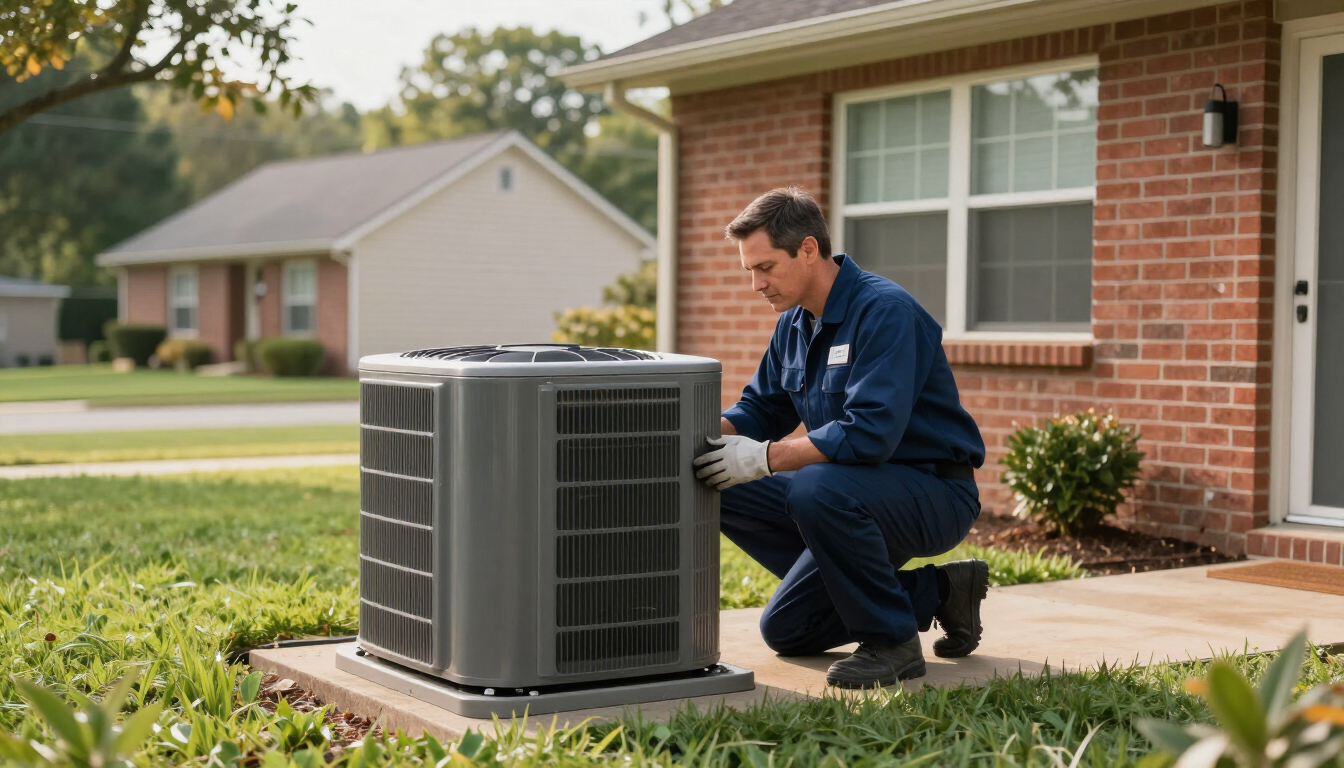
The visual check is easy. Walk out to your outdoor unit and look at the fins surrounding the unit — the thin metal slats that form the outer shell of the condenser. If you can see dirt, cottonwood fluff, grass, or debris clogging those fins, your condenser coil needs cleaning. A professional condenser coil cleaning runs $100 to $300 depending on access and fouling level. It is one of the highest-return maintenance items for reducing summer electricity bills.
What you can do yourself right now: turn the system off at the breaker, then use a garden hose on a gentle setting to spray the fins from inside out — not outside in. That removes surface debris without driving it deeper into the coil. Never use a pressure washer. The aluminum fins bend easily and a bent fin field reduces airflow further. For deep cleaning with chemical coil cleaner, schedule a professional tune-up.
Reason 5 — Your System Is Short-Cycling
Short cycling is when your AC turns on, runs for one to three minutes, shuts off, then starts again almost immediately. This cycle repeats dozens of times per hour instead of the normal pattern of two to four longer, complete cooling cycles.
Short cycling destroys efficiency in two specific ways. First, compressor startup draws dramatically more amperage than steady-state operation — the equivalent of flooring a car's accelerator from a dead stop repeatedly rather than cruising at speed. Repeated startups multiply your electricity consumption without producing proportional cooling. Second, short cycling prevents the system from completing the dehumidification portion of its cooling cycle. Moisture removal from NWA's humid air requires sustained coil contact time. Short cycles produce cold but damp air — a combination that makes your thermostat think the house is cooler than it actually feels, driving you to set the temperature lower and extend the system's total runtime further.
Causes of short cycling in NWA homes include: an oversized system that cools the air near the thermostat before the whole home equilibrates, a failing thermostat that reads temperatures inaccurately, a refrigerant issue causing the system to trip its high-pressure safety switch, a dirty evaporator coil causing the low-pressure safety to trip, or a failing control board. The symptom — rapid on-off cycling — is easy to notice once you know what to listen for. If you can hear your outdoor unit starting and stopping multiple times in a 15-minute window, your system is short-cycling and your bill is paying for it.
Short cycling diagnosis requires a professional visit. The fix ranges from a thermostat replacement at $100 to $300 to a more involved refrigerant or control board repair. The electricity savings from resolving short cycling typically appear on the very next billing cycle.
Reason 6 — Your System Is Old and Operating at a Fraction of Its Original Efficiency
This is the bill-driver NWA homeowners most consistently underestimate — because the decline is gradual, invisible, and easy to attribute to everything else.
<cite index="28-1">A 20-year-old unit running at 8 to 10 SEER is working dramatically harder and using far more electricity than a modern 16 SEER2 system to achieve the same level of cooling. When you factor in that older equipment loses efficiency as it ages due to dirty coils, refrigerant degradation, and worn components, the actual performance gap between a 20-year-old AC and a new high-efficiency unit is often even wider than the nameplate ratings suggest.</cite>
Warning Sign 7 — The System Cannot Manage NWA Humidity Anymore
This is the most underrated warning sign on this list — and the one that NWA homeowners are most likely to attribute to something other than their HVAC system.
<cite index="28-1">A 20-year-old unit running at 8 to 10 SEER is working dramatically harder and using far more electricity than a modern 16 SEER2 system to achieve the same level of cooling. When you factor in that older equipment loses efficiency as it ages due to dirty coils, refrigerant degradation, and worn components, the actual performance gap between a 20-year-old AC and a new high-efficiency unit is often even wider than the nameplate ratings suggest.</cite>
Here is the NWA-specific context that makes this particularly urgent right now. Northwest Arkansas experienced its construction boom between roughly 1998 and 2010. Tens of thousands of homes across Bentonville, Rogers, Springdale, and Fayetteville were built and equipped during that window. HVAC systems installed in 2003, 2005, or 2008 were rated at SEER 10 to SEER 13 when new. Modern replacement systems run SEER2 15, 16, 17, and above. That efficiency gap — between what a 2005-era system can deliver in 2026 and what a new system delivers — is not theoretical. It shows up on your bill every month.
<cite index="25-1">Upgrading from a standard 14 to 16 SEER unit can cut cooling costs by 30 to 40 percent for homeowners running older 10 to 12 SEER units.</cite> On a household spending $250 per month on summer electricity with 52% going to HVAC, a 30% reduction in cooling costs is $39 per month — $234 per summer season — $3,510 over a 15-year equipment lifespan, before we account for further efficiency degradation on the aging unit.
The compounding factor: an old system that was rated SEER 12 new is not operating at SEER 12 in 2026. Years of refrigerant microleakage, coil fouling, motor wear, and component degradation mean it is actually operating significantly below its nameplate rating. The gap between what you are paying and what a new system would cost you is wider than the numbers alone suggest.
Our 7 Warning Signs Your HVAC Needs Replacing guide covers the specific patterns that indicate an aging system is costing you more than it is worth to keep. And our AC Repair vs. Replace guide walks through the financial framework for making that decision with confidence.
Reason 7 — Your Thermostat Is Working Against You
Your thermostat is the brain of your HVAC system. When it is mislocated, miscalibrated, or simply set in ways that fight your home's physics, it drives unnecessary runtime — and unnecessary electricity consumption.
The most common thermostat problem we find in NWA homes is location. A thermostat installed in a hallway that receives direct afternoon sunlight reads warmer than the rest of the house and triggers cooling cycles the system does not need. A thermostat near a supply vent reads cooler than the rest of the house and stops cooling cycles before the back bedrooms have reached comfort temperature. Both situations produce the same result: the system runs at the wrong time, for the wrong duration, and your bill reflects it.
The second most common issue is thermostat setpoint habits. Setting your thermostat to 68 degrees does not cool your house faster than setting it to 75 degrees. Air conditioning is not like a gas pedal — the compressor runs at full capacity regardless of the gap between setpoint and current temperature. The only thing a dramatically lower setpoint does is extend runtime until that lower temperature is reached. In NWA's summer heat, an extremely aggressive setpoint means the system runs almost continuously — and your bill looks like it. The Department of Energy recommends 78 degrees when home, 85 degrees when away, as a balance between comfort and efficiency.
Smart thermostats — Ecobee, Google Nest, Honeywell Home T6 Pro — address both problems. They use remote sensors to average temperatures across multiple rooms rather than reading only one location. They learn your schedule and pre-cool before peak heat arrives rather than reacting to it. And SWEPCO pays a $75 rebate on qualifying ENERGY STAR smart thermostats — meaning the upgrade to a $150 to $200 device is partially offset immediately. Our NWA HVAC Rebates guide covers how to capture that rebate alongside any other utility program you qualify for.
The NWA-Specific Factors That Make Every One of These Reasons Worse
Generic "why is my electric bill high" guides miss the local context that determines how severely each of these factors affects NWA homeowners specifically. Three conditions in NWA amplify every bill-driving problem on this list.
The 140-degree attic problem. A huge portion of NWA homes from the 2000s construction era have both their air handler and their ductwork located in unconditioned attic space. In July, that attic is 140 to 160 degrees. Every foot of flex duct running through that environment transfers heat from the attic back into the conditioned air moving through the duct — even without any leakage. Building America research from the Department of Energy documents that ducts in unconditioned attics increase HVAC energy use by 10 percent from heat transfer alone, before duct leakage is even factored in. NWA homeowners with attic-mounted systems are fighting their attic every single summer day.
SWEPCO rate trajectory. SWEPCO recently filed for a rate increase of approximately $30 per month for residential customers, pending Arkansas Public Service Commission approval. The filing cited the need to recover a revenue deficiency and infrastructure investment. Whether or not the full increase is approved, the direction of NWA electricity rates is upward — meaning system inefficiency that costs you $50 per month today will cost you more when rates rise. Fixing the HVAC inefficiency now captures savings at current rates and protects you from the amplified cost of that same inefficiency at higher future rates.
How to Diagnose Which Reason Applies to Your Home
Here is a practical diagnostic sequence you can run before calling anyone.
Step 1 — Check the filter.
Pull it out, hold it up to light. If you cannot see light through it, replace it immediately. If your bill drops next month, you found the primary cause.
Step 2 — Look at your outdoor unit.
Is the condenser coil visibly dirty? Are plants or debris restricting airflow within two feet of the unit? Clean the exterior with a gentle garden hose spray and clear the clearance zone.
Step 3 — Watch the cycling pattern.
Stand near the outdoor unit during peak afternoon heat. Is it running in long, sustained cycles of 15 to 20 minutes? Or turning on and off every two to three minutes? Short cycling confirms a problem that needs professional diagnosis.
Step 4 — Check your room temperatures.
Walk through every room in your home at 3 PM on a hot afternoon. If the temperature varies more than three to four degrees from the thermostat setpoint in any room, you likely have a ductwork issue — either leakage or imbalance — that is forcing the system to overwork.
Step 5 — Pull your bills from the past three summers.
Compare August 2024, August 2025, and August 2026 with thermostat settings and occupancy held constant. A consistent upward trend independent of rate increases points to system efficiency degradation — meaning your aging system is the primary driver and replacement economics deserve evaluation.
If Steps 1 through 4 yield nothing obvious and Step 5 shows a consistent trend, the problem is likely inside the system — refrigerant, coils, or age-related efficiency loss — and requires professional diagnostic to confirm.
Call Breeze Heat and Air at 479.318.0107. Our diagnostic visit includes a full system assessment: electrical component testing, refrigerant pressure check, coil inspection, airflow measurement, and ductwork visual assessment. You will leave knowing exactly what is driving your bill — not with a guess or a sales pitch.
What a Professional HVAC Tune-Up Actually Fixes (And What It Costs)
A professional AC tune-up in the NWA market runs $75 to $250 depending on the company and what the visit covers. Here is what a complete tune-up should address and how each item affects your bill.
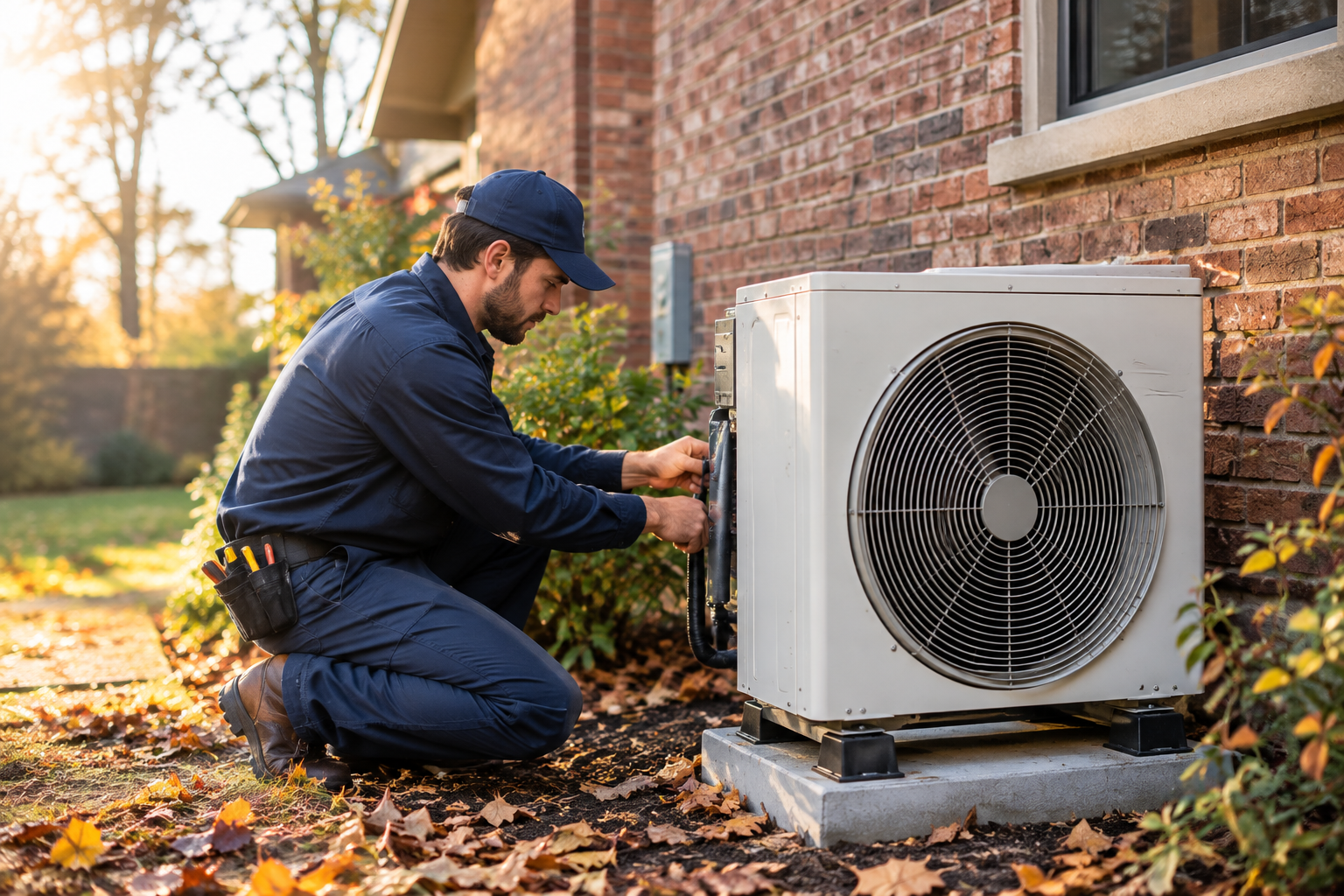
Condenser coil cleaning recovers up to 10 to 30 percent efficiency loss from fouling. Refrigerant pressure check identifies low-refrigerant conditions before they escalate to compressor damage. Electrical component testing — capacitor, contactor, control board — identifies components running at degraded performance before they fail. Evaporator coil inspection catches biological growth and particulate buildup that restrict airflow and reduce heat transfer. Drain line clearing prevents condensate backup that trips safety switches. Airflow measurement confirms whether your system is moving adequate air volume through the duct system.
SWEPCO's CoolSaver program pays a rebate of $175 on 1.5-to-2.5-ton systems and $250 on 3-to-5-ton systems for qualifying tune-ups performed by approved contractors. That rebate covers a significant portion of the tune-up cost — sometimes the entire cost — meaning the electricity savings the tune-up produces are nearly free to capture. Breeze Heat and Air is a SWEPCO-approved contractor. Our Total Breeze Club membership includes annual tune-ups, priority emergency scheduling, and member repair discounts — the complete package for NWA homeowners who want to stop being surprised by summer electric bills.
The Honest Answer on When Efficiency Improvements Are Not Enough
We would be giving you an incomplete picture if we did not say this directly: for some NWA homes, the HVAC system's contribution to the summer electric bill cannot be meaningfully reduced through maintenance, repair, or thermostat optimization. When the system is old enough and inefficient enough, the honest answer is replacement.
A 16-year-old SEER 10 system that has been maintained reasonably well is still a SEER 10 system. Cleaning the coils and sealing the ducts will recover some efficiency. But the fundamental gap between SEER 10 and SEER2 16 — a 37% difference in cooling energy consumption — cannot be closed through maintenance. It requires a new system.
The calculation worth running: if your summer electricity bill attributable to cooling averages $180 per month over six months, that is $1,080 per cooling season. A new SEER2 16 system reduces that by 30 to 37 percent — saving $324 to $400 per year. Over 15 years, that is $4,860 to $6,000 in electricity savings, before we factor in further efficiency degradation on the aging unit or future rate increases. Against a replacement cost of $5,500 to $8,500 installed, with SWEPCO rebates of $750 to $2,400 available on qualifying heat pump systems, the payback period on replacement for many NWA homeowners is genuinely compelling.
Our HVAC Replacement Cost guide for NWA covers those numbers in detail. And our NWA HVAC Rebates guide explains exactly how to capture every available dollar when you do replace.
Frequently Asked Questions About High Summer Electric Bills in NWA
What is a normal summer electric bill in NWA?
The average Arkansas residential electric bill runs approximately $129 per month at typical consumption. In summer months with sustained AC use, NWA SWEPCO customers commonly see bills of $175 to $300 depending on home size, system efficiency, thermostat habits, and home insulation. Bills consistently above $250 for a home under 2,200 square feet warrant a system evaluation.
Why did my electric bill double this summer compared to last year?
A sudden doubling — rather than a gradual increase — usually points to a specific mechanical failure rather than general aging. The most common sudden-doubling causes are a refrigerant leak, a failed capacitor causing the system to run inefficiently, a dirty coil causing the compressor to overwork, or a ductwork disconnection that suddenly began dumping conditioned air into the attic. Any of these can double cooling electricity consumption almost overnight.
Does running my AC at a lower temperature use more electricity?
Yes, significantly. Setting your thermostat to 68 degrees in an NWA summer means your system runs almost continuously trying to overcome the heat difference between inside and outside. The Department of Energy recommends 78 degrees when home in summer. Each degree you raise the setpoint reduces cooling energy consumption by roughly 3 percent.
Can I lower my electric bill without replacing my AC?
In many cases, yes — especially if the system is under 12 years old and the bill increase is recent. Filter replacement, condenser coil cleaning, duct sealing, thermostat optimization, and refrigerant leak repair can collectively recover 20 to 40 percent of excess cooling energy consumption. A professional tune-up is the most efficient way to identify which combination of improvements applies to your specific system.
What time of day should I run my AC to save money?
Pre-cooling your home in the morning — running the AC to 74 or 75 degrees before 10 AM when outdoor temperatures are lower — allows the system to operate at higher efficiency and build a thermal buffer before peak afternoon heat. Allowing the thermostat to drift up one to two degrees between 2 PM and 6 PM — peak demand hours — reduces electricity consumption during the most expensive period. A smart thermostat automates this strategy without requiring manual adjustment.
Is SWEPCO offering any help for high summer bills in 2026?
Yes. As of this week, SWEPCO has activated emergency bill assistance measures for the summer 2026 heat emergency, including pausing required deposits for existing residential customers through October and expanding access to their Average Monthly Payment program for predictable monthly billing. Contact SWEPCO directly at 1-888-216-3523 or visit swepco.com for current program availability.
Does Breeze Heat and Air offer free estimates for efficiency improvements?
Yes. Whether the conversation is a tune-up, a duct assessment, a specific repair, or a system replacement evaluation, we do not charge for the initial estimate. Call 479.318.0107 or schedule online.
The Bottom Line for NWA Homeowners Staring at a High Summer Bill
Matthew Kolb's $250-a-month electric bill in NWA made national news. What did not make the news is that most of the households paying bills like that have at least one fixable HVAC problem contributing to the number.
A clogged filter. A dirty condenser coil. A duct system leaking 25% of conditioned air into a 150-degree attic. A refrigerant leak making the compressor run twice as long as it should. A 16-year-old system doing its best with SEER 10 equipment in 2026 conditions.
None of these are exotic problems. All of them are diagnosable in a single service visit. Most of them are fixable for $100 to $500. And all of them are costing NWA households real money — not just this month, but every month of every summer until someone addresses them.
Start with the filter. Check the outdoor unit. Watch the cycling pattern. Compare three summers of bills. And if any of the seven reasons in this guide match what you are experiencing, call Breeze Heat and Air at 479.318.0107. We will tell you exactly what is driving your bill and what it costs to fix — honestly, without pressure, and with a full system assessment that covers everything rather than just the obvious parts.
We serve Bentonville, Fayetteville, Rogers, Springdale, Tontitown, Lowell, Farmington, Cave Springs, Siloam Springs, Pea Ridge, Gravette, Prairie Grove, Johnson, Elm Springs, and all of Northwest Arkansas.
What is your current summer electric bill running? Share it in the comments with your home size and system age — we will tell you whether that number is reasonable for your setup or whether there is something worth investigating.
Breeze Heat and Air — LIC# 15474066 — Rheem Pro Partner — Mitsubishi Diamond Dealer — Serving all of Northwest Arkansas
HVAC Resources for Northwest Arkansas Homeowners
Expert guidance on repairs, replacements, rebates, and maintenance — everything you need to make confident decisions about your home's heating and cooling.